Water first
Every job starts with where the moisture comes from. Liners and machines come later, if at all.
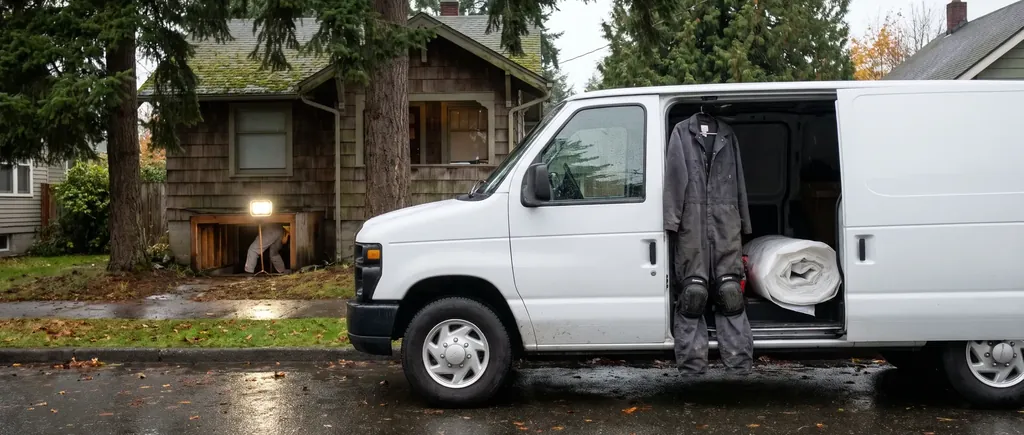
A Whatcom County crew that finds out where the water is coming from before anyone talks about what to sell you.
Many people find out something is wrong under their house second-hand. A home inspector's report says "standing water observed" or "vapor barrier torn". A musty smell comes up through the floor in November. The next step is often a sales visit, and it is hard to know whether you are being told what the house needs or what the company sells.
We think the honest answer starts with the water. Find where it is coming from, whether that is a downspout emptying at the foundation, ground sloping the wrong way, a plumbing leak or bare soil, and fix that first. The EPA's own moisture advice starts in the same place: fix plumbing leaks quickly, keep gutters working, and make sure the ground slopes away from the house.
Then we do the least work that will actually last. Sometimes that is a new ground cover and nothing else. A small Washington State University study of new Northwest homes concluded that, with proper site water management, both vented and sealed crawl spaces can work. The EPA's Indoor airPLUS program lists homes in a marine climate, which includes ours, among the exceptions to its sealed crawl space recommendation. So we do not tell every homeowner they need encapsulation and a dehumidifier. When a properly laid vapor barrier and a drainage fix will do it, that is what we recommend.
When sealing a crawl space is the right call, we say what comes with it. In that same WSU study, in test homes in a higher-radon area than Whatcom County, radon in sealed crawl spaces measured higher than in vented ones, and Washington's code requires a radon system and a continuously running exhaust fan in a crawl space without vents. A sealed crawl space is not radon mitigation, and we will not pretend otherwise.
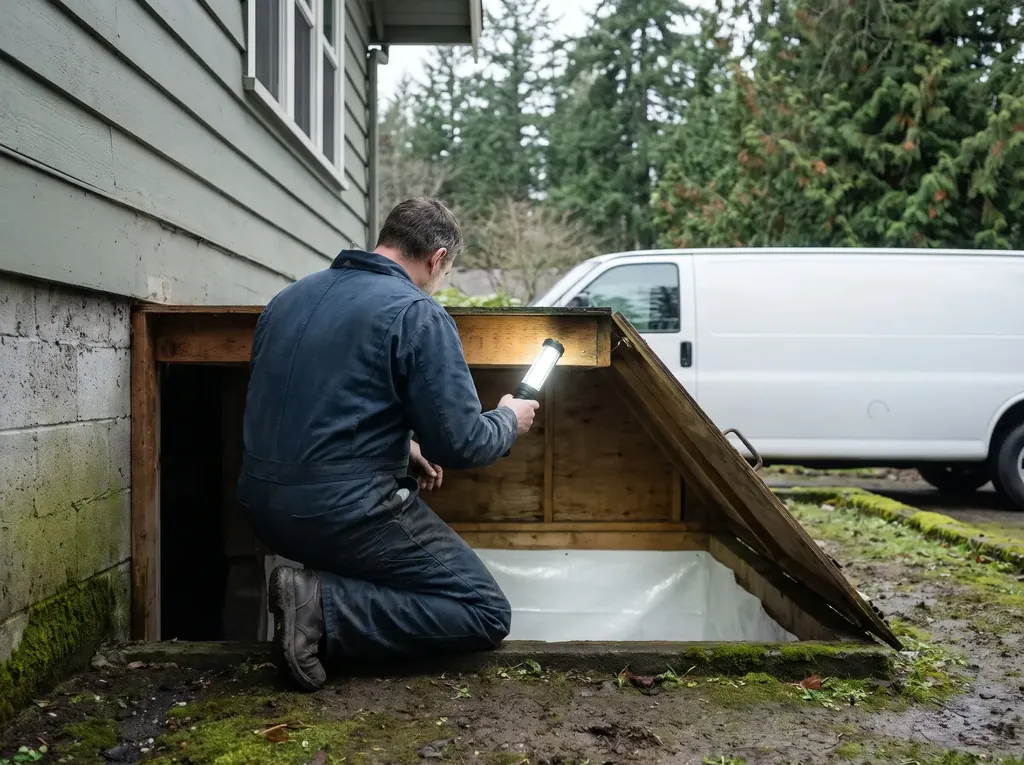
Every job starts with where the moisture comes from. Liners and machines come later, if at all.
If a downspout extension or a new ground cover is the whole answer, that is the answer.
We do not do structural foundation repair, house lifting, mold remediation, pest extermination or radon mitigation. When a home needs one of those, we say so on the first visit and tell you what kind of company to call: a structural engineer, a mold remediation company, a pest control company or a radon mitigation contractor.
Washington writes its own crawl space rules rather than using the national model code word for word. We work from the state's text and leave the final word to the local building department.
We are not listing any credentials yet, and we will not list one until it can be checked. If you have a question about how we would handle your job, ask us and we will walk you through it.
Across Whatcom County: Bellingham, Ferndale, Lynden, Blaine, Birch Bay, Everson, Sudden Valley, Sumas, Deming and Custer, plus the rural roads in between. Not sure whether you are in range? Ask and we will tell you.
Send a photo from the hatch, or the crawl space part of your inspection report. We will come back with a time for a free inspection and an honest read, including when the honest read is that you need a different specialist, or very little at all.
We will be in touch to book a time to look under the house. If it cannot wait, call (360) 555-0163.
Nothing was sent. Please call (360) 555-0163 and we will set up your free inspection.