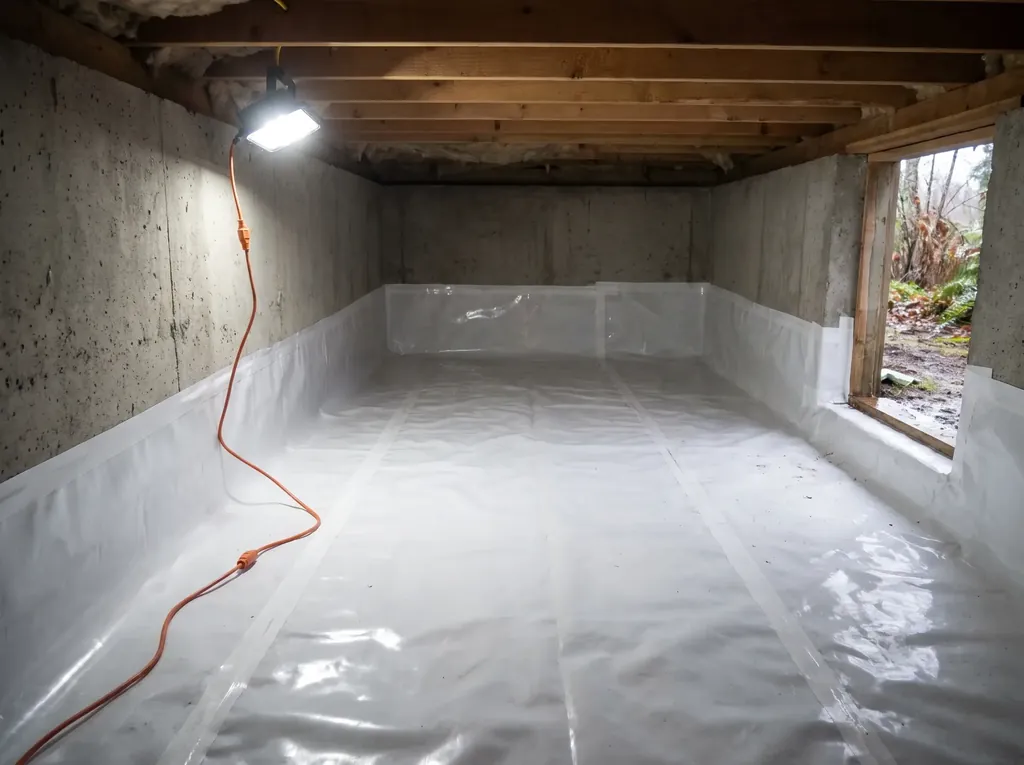
Crawl Space Encapsulation
Ground and walls lined and sealed, with the moisture source fixed first, for crawl spaces that should be part of the house.
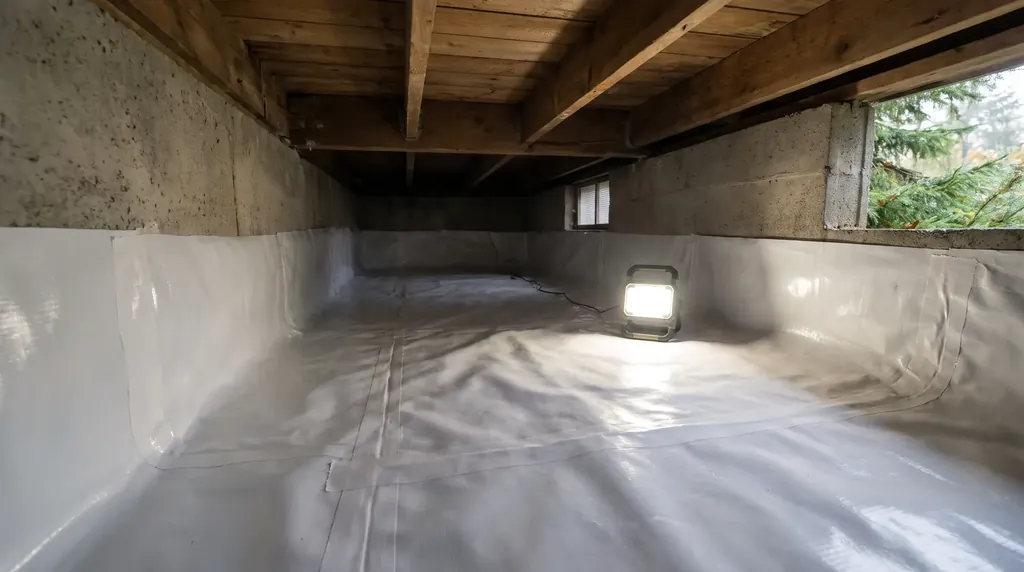
Something in your inspection report worried you, or the floor smells musty when the heat comes on. We go under the house, find where the water is coming from and fix that first. Then we tell you honestly whether you need a vapor barrier, a sealed crawl space, a sump pump or nothing more than a longer downspout.
Find the water first
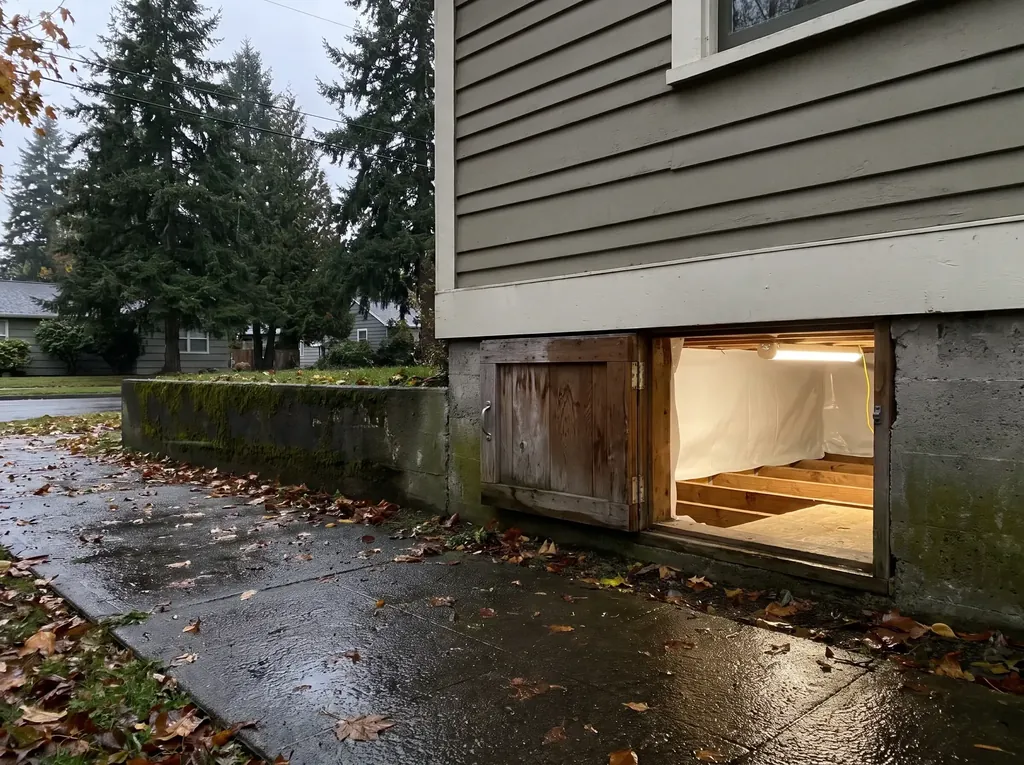
You may have been told your crawl space needs encapsulating. Some do. But the research done closest to home is more careful than the sales pitch. A small Washington State University study of new homes in the state's marine and cold climates concluded that, with proper site water management, both sealed and vented crawl spaces can be built successfully in the Northwest. The EPA's Indoor airPLUS program, which otherwise recommends sealed and conditioned crawl spaces, lists marine climates like ours among its exceptions.
What every crawl space does need is a dry floor. Bare soil releases moisture into the air above it, which is why the Department of Energy says a crawl space must always have a ground cover. And water has to be kept from running under the house in the first place. Bellingham gets about 35 inches of rain a year at the airport, and about half of it falls between October and January. That is when a crawl space that looked fine in August can show its problems.
So we start with the water. Downspouts that empty against the foundation, ground that slopes toward the house, runoff coming down a hillside lot, a leaking pipe under the floor. Fix those, lay a proper vapor barrier, and a vented crawl space can be in good shape. Where sealing the crawl space really is the right call, we will explain why, and what Washington's code expects to come with it.
Ground and walls lined and sealed, with the moisture source fixed first, for crawl spaces that should be part of the house.
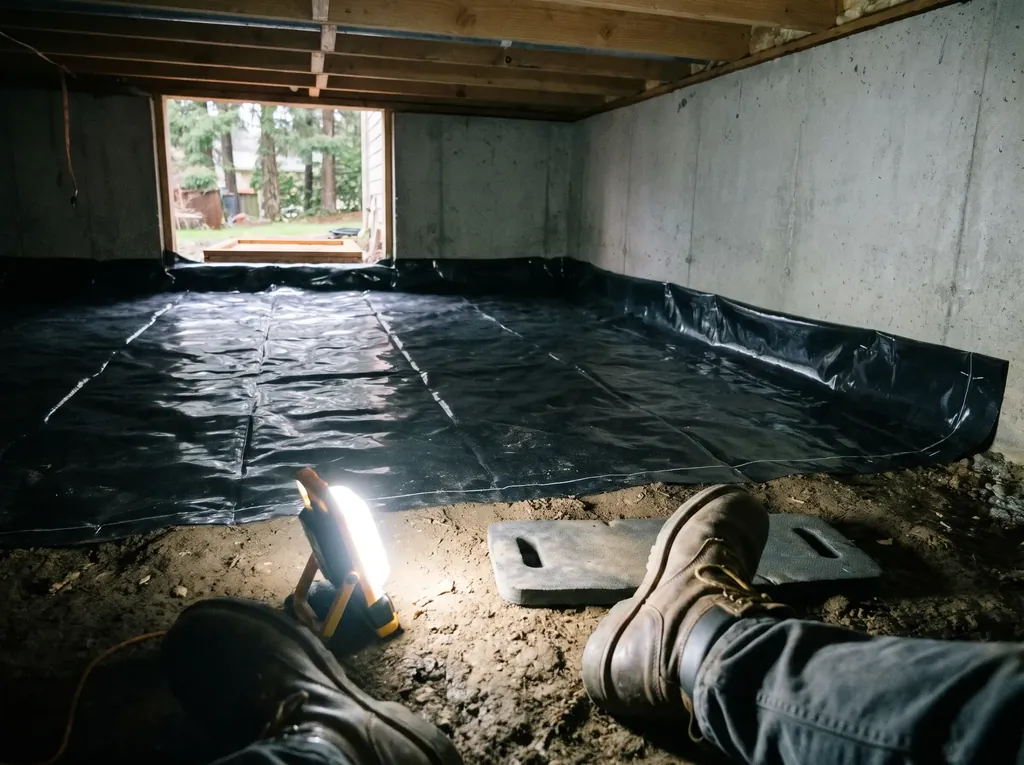
New ground cover, lapped, taped and run to the walls. Can be all a well-drained vented crawl space needs.
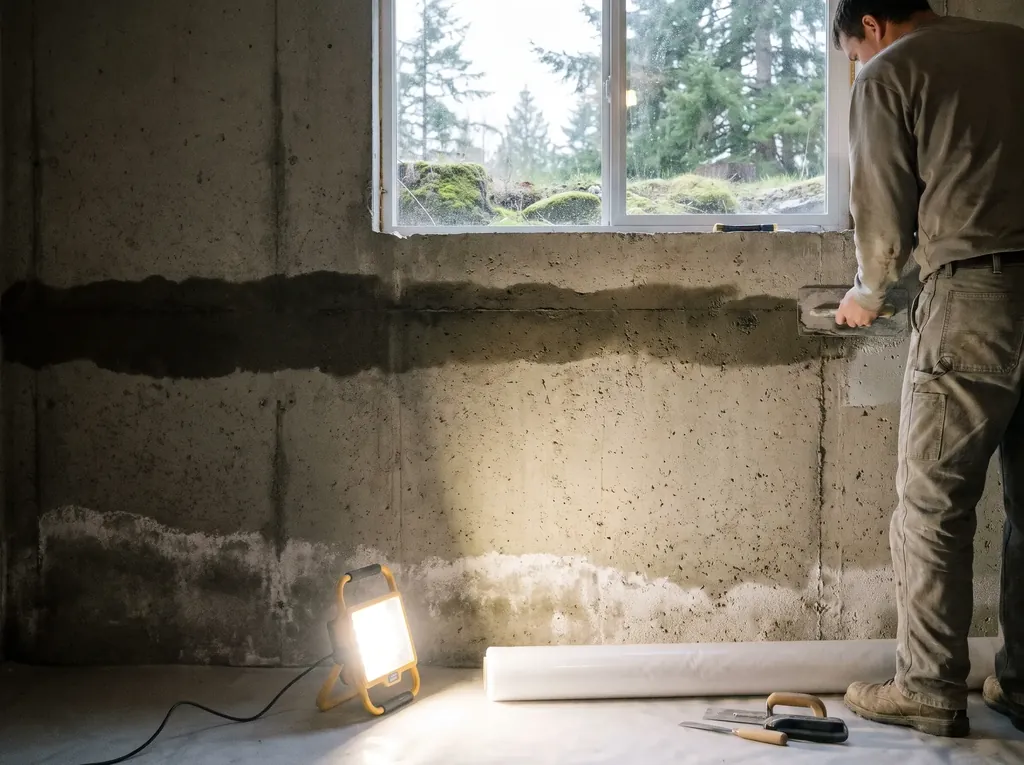
Seeping walls and wet floors traced to the source, then fixed outside, inside or both.
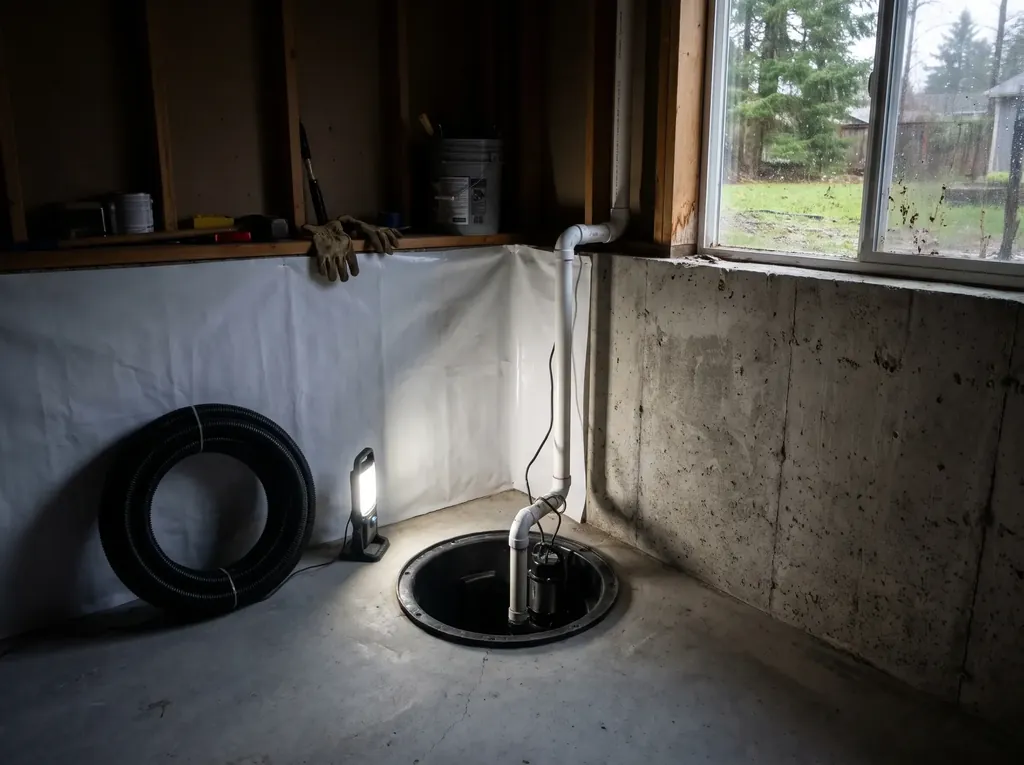
New pits, replacement pumps and discharge lines that take the water somewhere it is allowed to go.
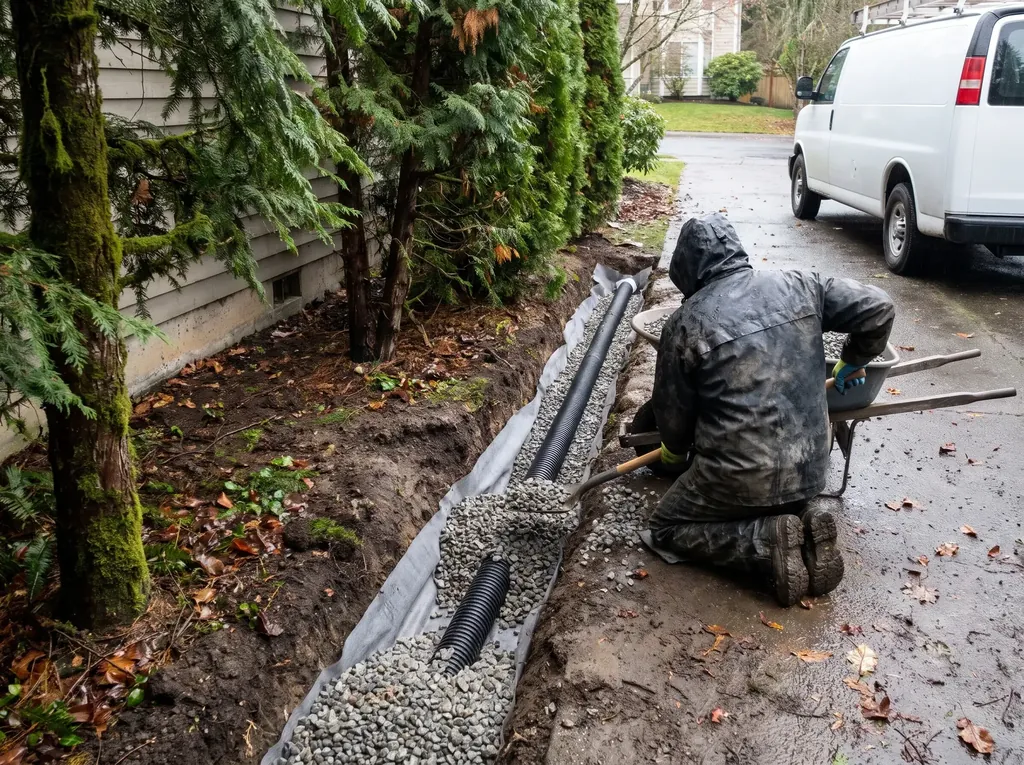
Footing drains, yard drains and downspout lines that keep water from reaching the foundation.
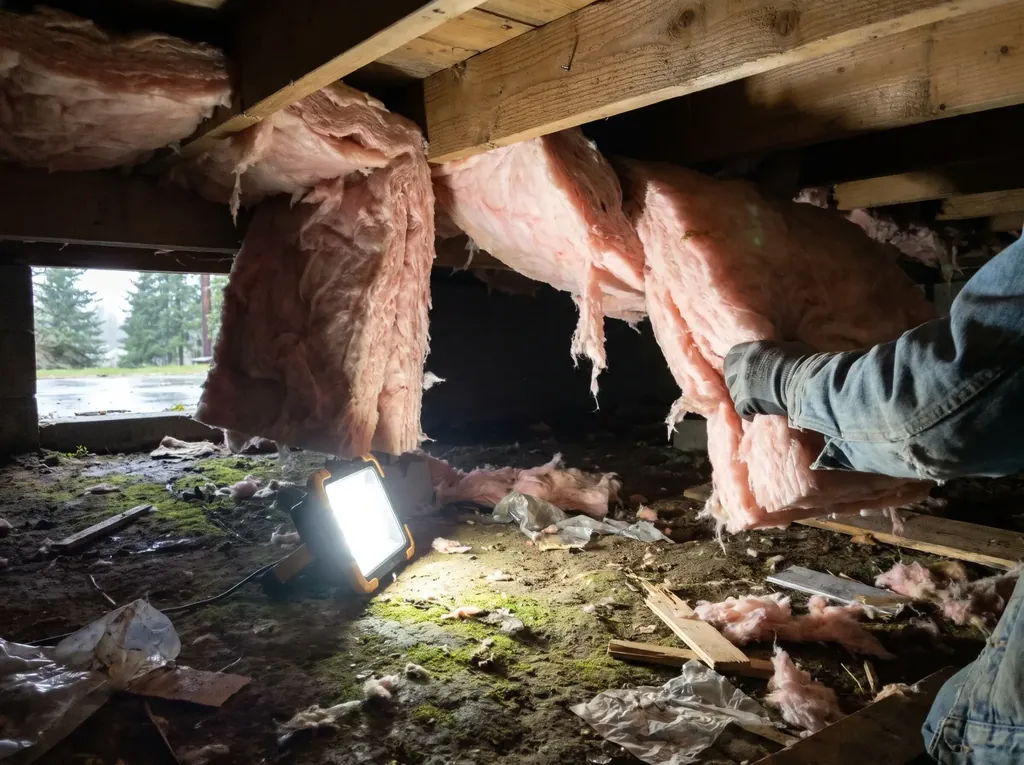
Fallen, wet or rodent-soiled insulation and old plastic cleared out so the space starts clean.
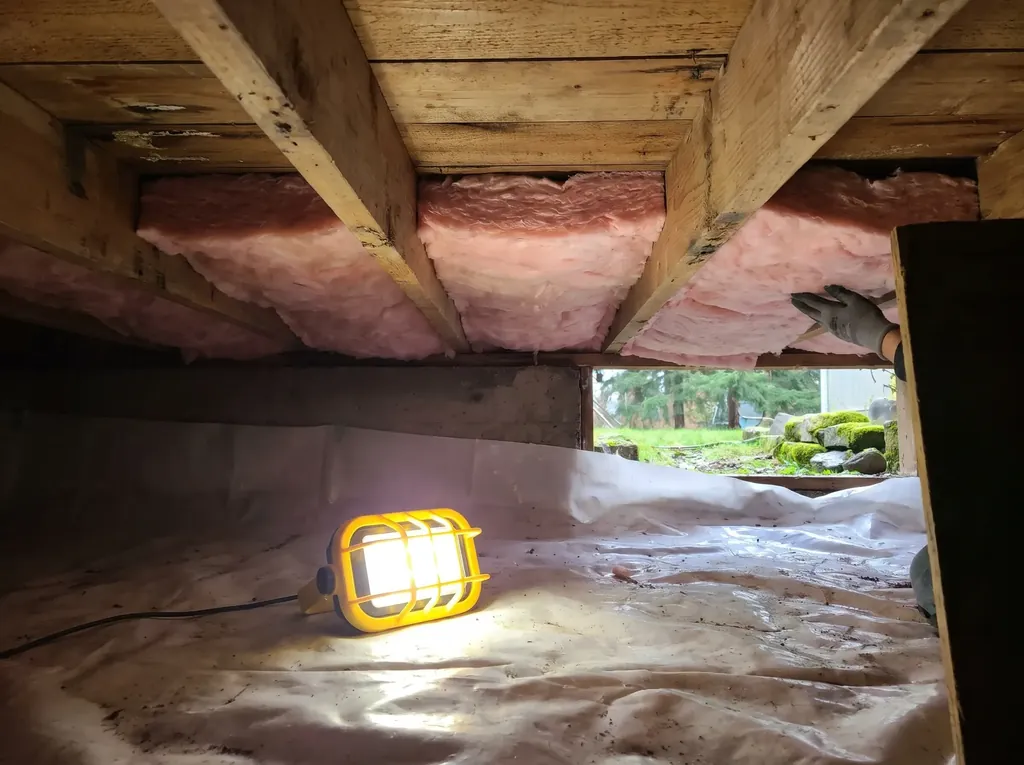
Floor or wall insulation, chosen to suit whether the crawl space is vented or sealed.
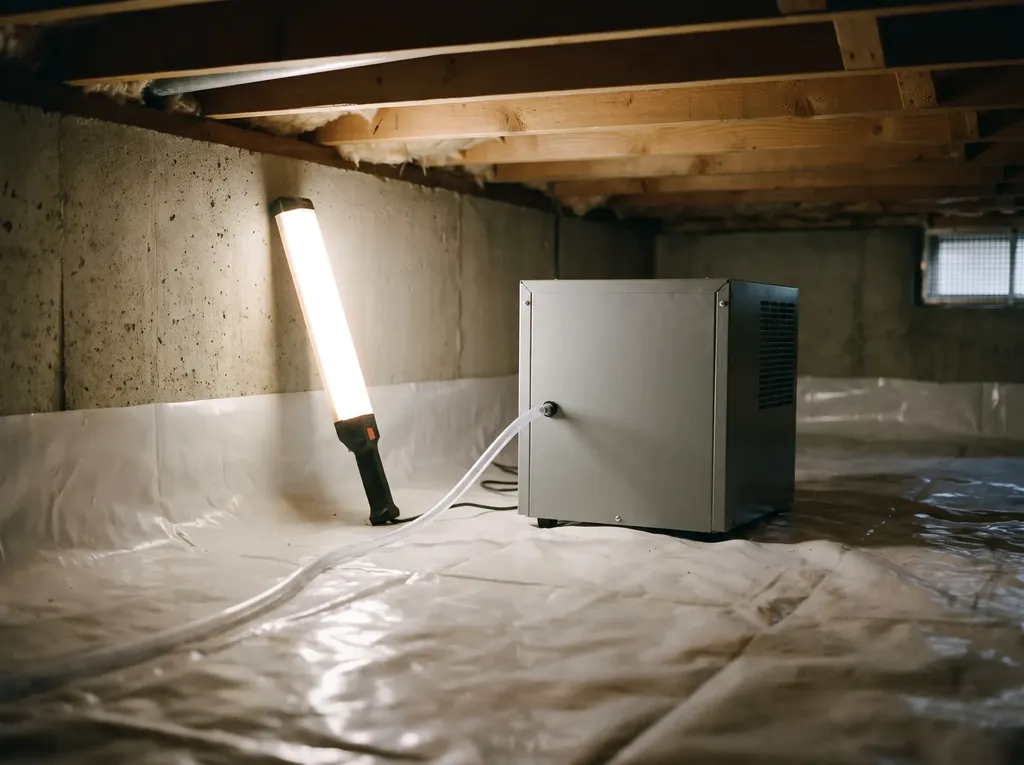
Sized for the space and drained properly, for sealed crawl spaces that still run damp.
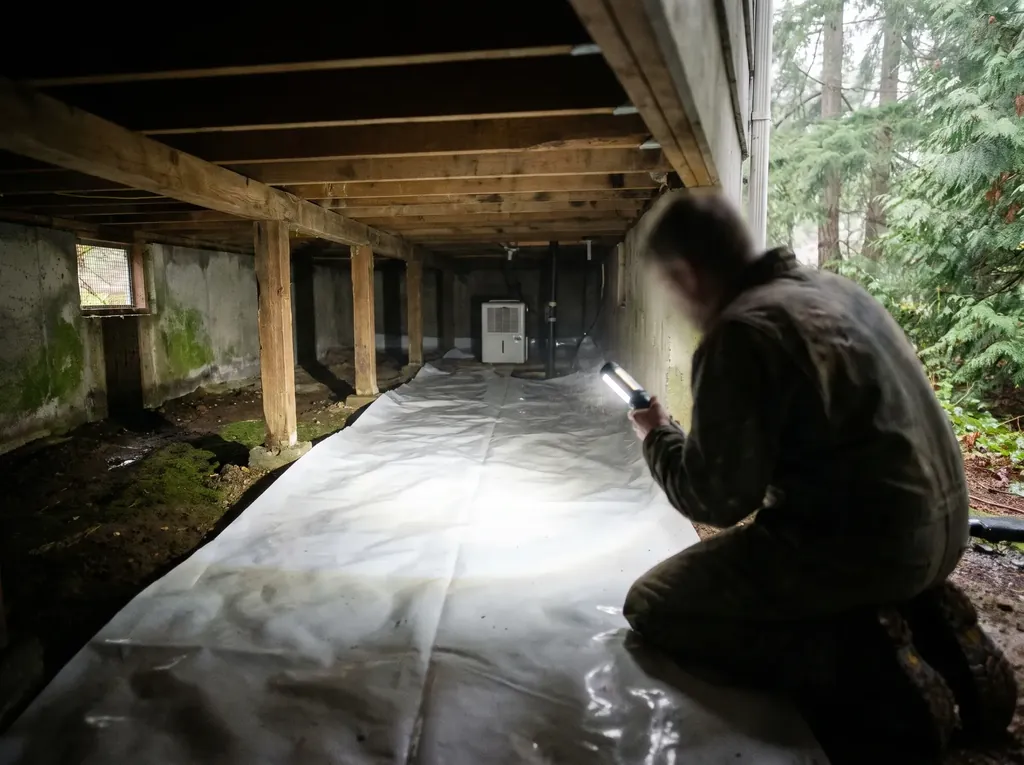
A look under the house before anyone talks about a fix.
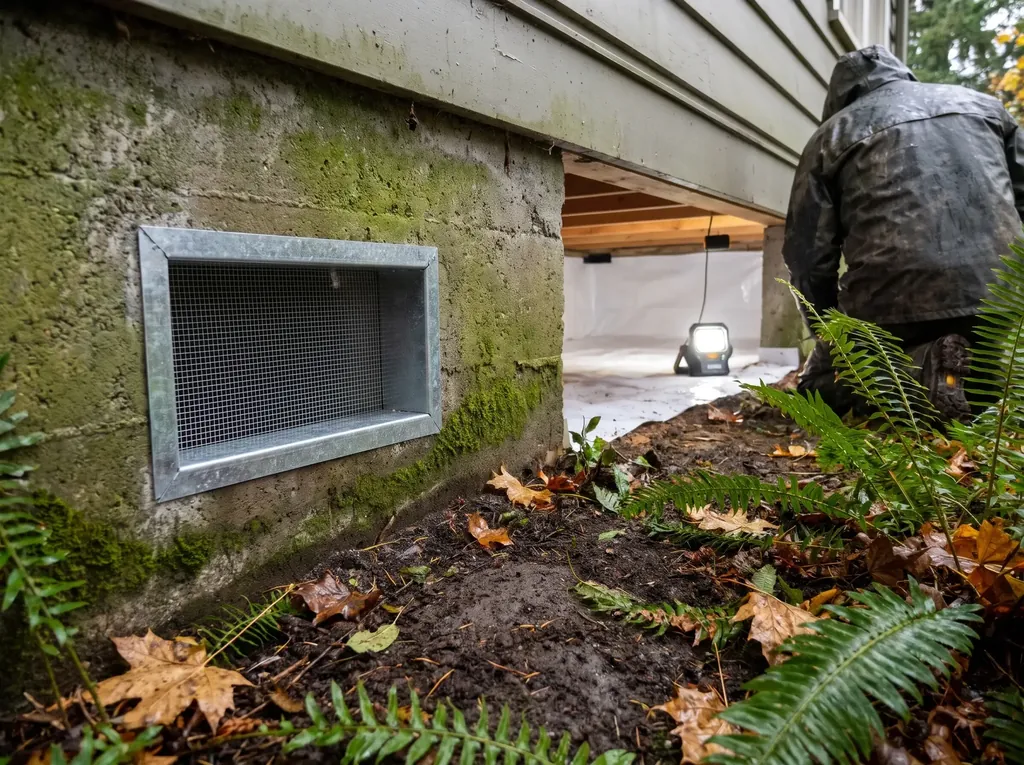
Gaps sealed and soiled material removed once the pest control company is done.
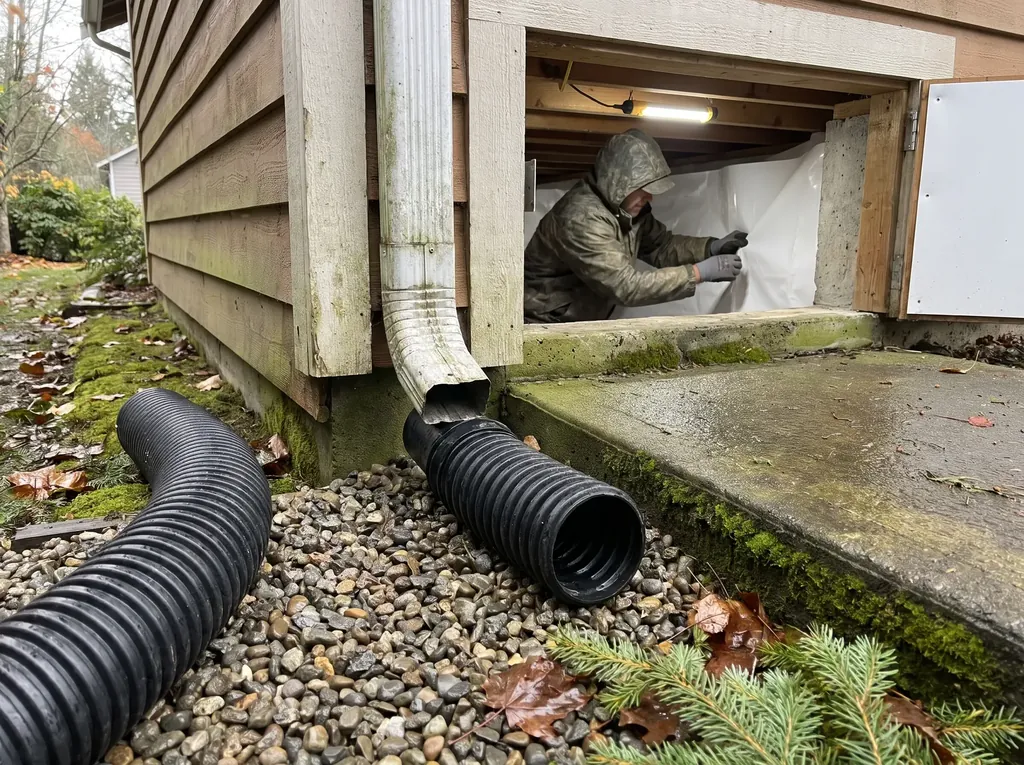
Roof water carried well away from the foundation instead of dumped beside it.
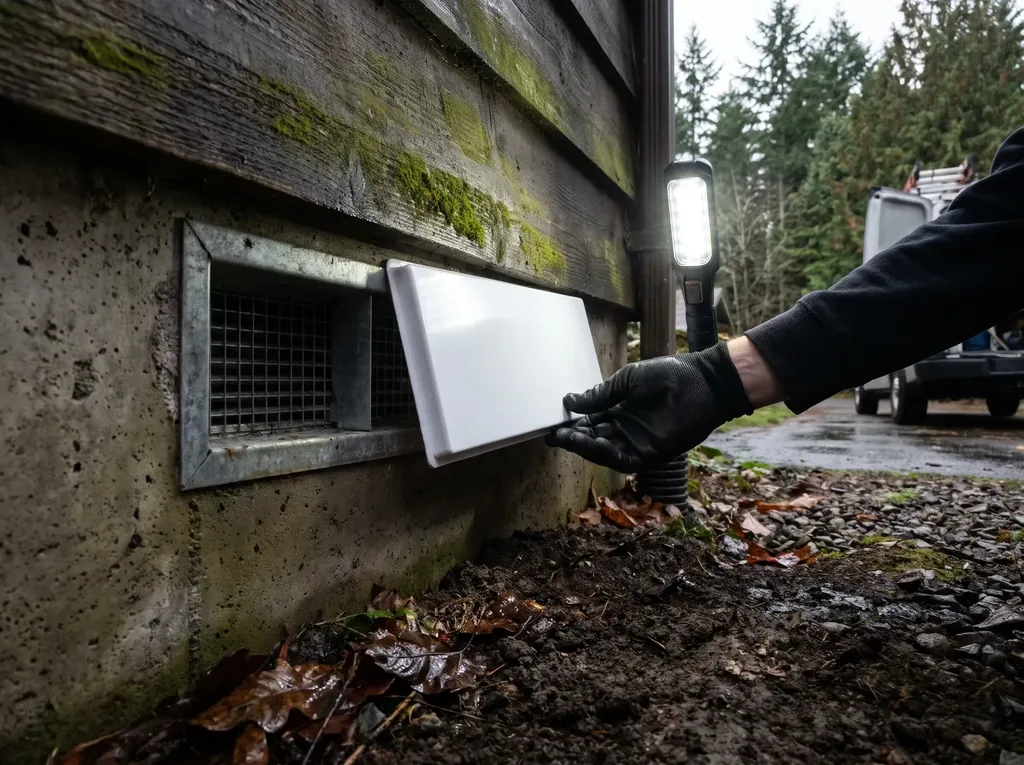
Vent screens, covers and insulated, weatherstripped access hatches.
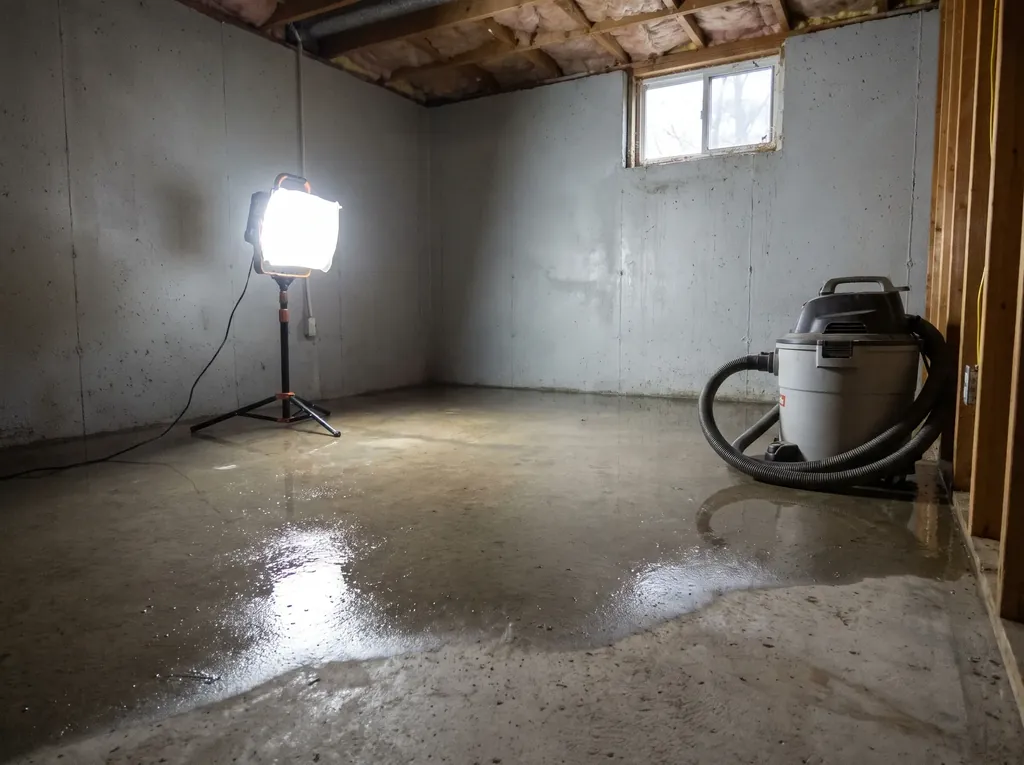
Standing water pumped out and wet materials removed after a seep or a failed pump.
If a downspout extension and a new vapor barrier will do it, that is what we recommend. A full encapsulation is a bigger job, and it should be chosen for a reason, not by default.
We will not tell you a vented crawl space is a health hazard or that sealing it will cut your energy bill by some percentage. The research closest to our climate does not support either claim, and we would rather you trusted the rest of what we say.
Structural foundation repair, house lifting, mold remediation, pest extermination and radon mitigation are other specialists' work. If that is what your house needs, you hear it on the first visit, along with the kind of company to call.
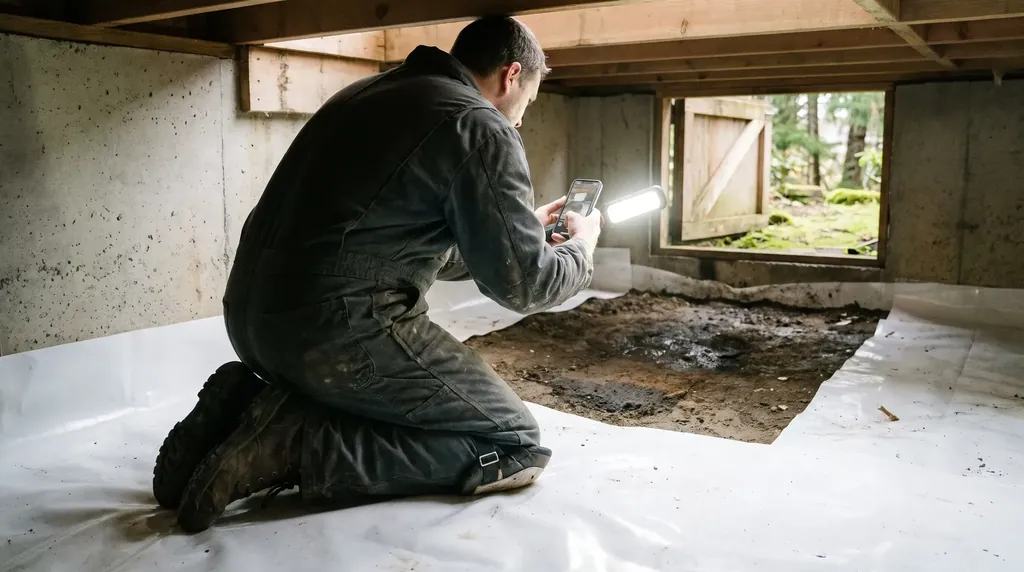
Call, use the form, or send photos or the crawl space section of your home inspection report.
We look at the soil, the ground cover, the insulation, the framing, the vents and any standing water.
Downspouts, grading and slope, because crawl space water can start outside the house.
What we found, what is causing it, and what we would do about it, smallest fix first.
We explain what we found and what we recommend. Nothing starts until you say yes.
The source fixed first, then the crawl space work.
We are only just starting to collect customer reviews. As they come in, each one will be shown in full, exactly as written.
We work under houses across Whatcom County: Bellingham, Ferndale, Lynden and Blaine, plus Everson, Sudden Valley, Birch Bay, Sumas, Deming, Custer and the rural roads in between.
That means older homes in Fairhaven, Columbia and the Lettered Streets, hillside lots in Sudden Valley and around Bellingham where runoff comes down toward the house, flat valley ground near the Nooksack in Ferndale and Everson, and second homes in Blaine and Birch Bay that sit closed up for weeks at a time.
Sometimes. Fix the water source first, then decide. For a vented crawl space on a site that drains well, a small Washington study of new homes found vented crawl spaces can perform adequately. One building scientist argues a crawl space works best either fully outside the house or fully inside it, as part of the house. A Washington study found the energy effect of sealing was minimal unless supply ducts in the crawl space were quite leaky. Closing your crawl space vents in Washington means a sealed vapor barrier, a radon system and a fan that runs all the time, not just a liner. Your local building department has the final say on how these rules apply to your home.
No. Washington's code requires a ground cover over the soil in a crawl space, but it allows vented crawl spaces. The EPA's Indoor airPLUS program exempts marine climates like ours from its sealed crawl space recommendation. What a crawl space has to be is dry, with the soil covered and water kept out.
Ours means going under the house and looking at the soil and ground cover, the insulation, the framing, the vents, any standing water and any signs of rodents, then walking the outside to see where the roof and surface water goes. A Washington home inspection covers some of the same ground: licensed inspectors must enter crawl spaces where readily and safely accessible, look for signs of flooding and moisture, probe wood where deterioration is suspected, and report wood rot. If you have a report, send it and we can start from there. Our guide to crawl space notes in a home inspection report explains the common ones.
Size is only one factor. The price also depends on how easy the crawl space is to get into, how much old insulation and debris has to come out, whether drainage has to be fixed first, and the code items that come with a sealed crawl space in Washington. After a free inspection we can tell you what your crawl space needs and what it does not. Our guide to crawl space encapsulation cost walks through each factor.
Check your own policy before counting on it. Washington's Office of the Insurance Commissioner says homeowner policies do not cover flooding and that coverage varies widely, so read your policy. One state insurance regulator notes that water seeping in through a foundation is often treated as a maintenance issue. Your agent can tell you what yours covers.
Tell us what is going on under the house and which town you are in. If you have photos or a home inspection report, attach them, and we may be able to give you a first opinion before we visit.
We will be in touch to book a time to look under the house. If it cannot wait, call (360) 555-0163.
Nothing was sent. Please call (360) 555-0163 and we will set up your free inspection.