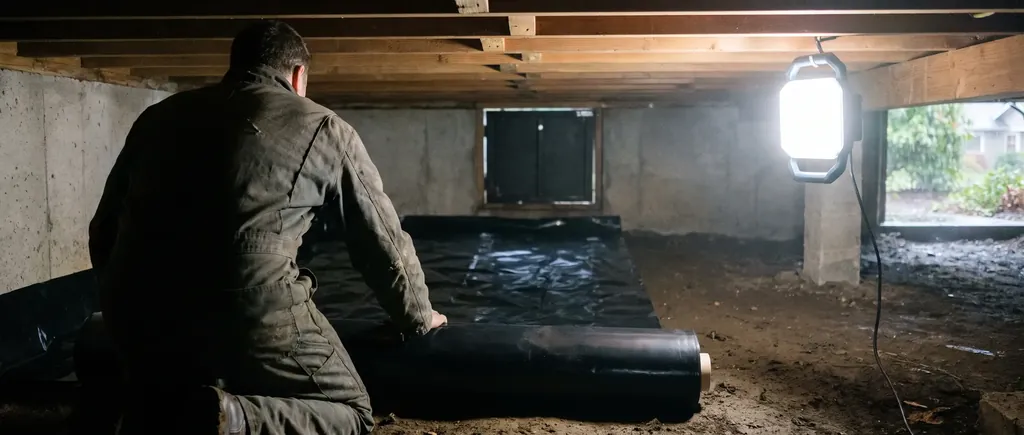
Technician laying a new vapor barrier in a crawl space

Crawl Space Vapor Barrier Installation

The plastic on the ground under your house does more work than it looks. When it is torn, missing or bunched against one wall, the soil puts moisture into the crawl space. We take out what has failed and lay a new ground cover, lapped, sealed and run to the walls.

Can be all a well-drained vented crawl space needs

  • Free crawl space inspection
  • The water source fixed before any liner goes down
  • A straight answer when a vapor barrier is enough
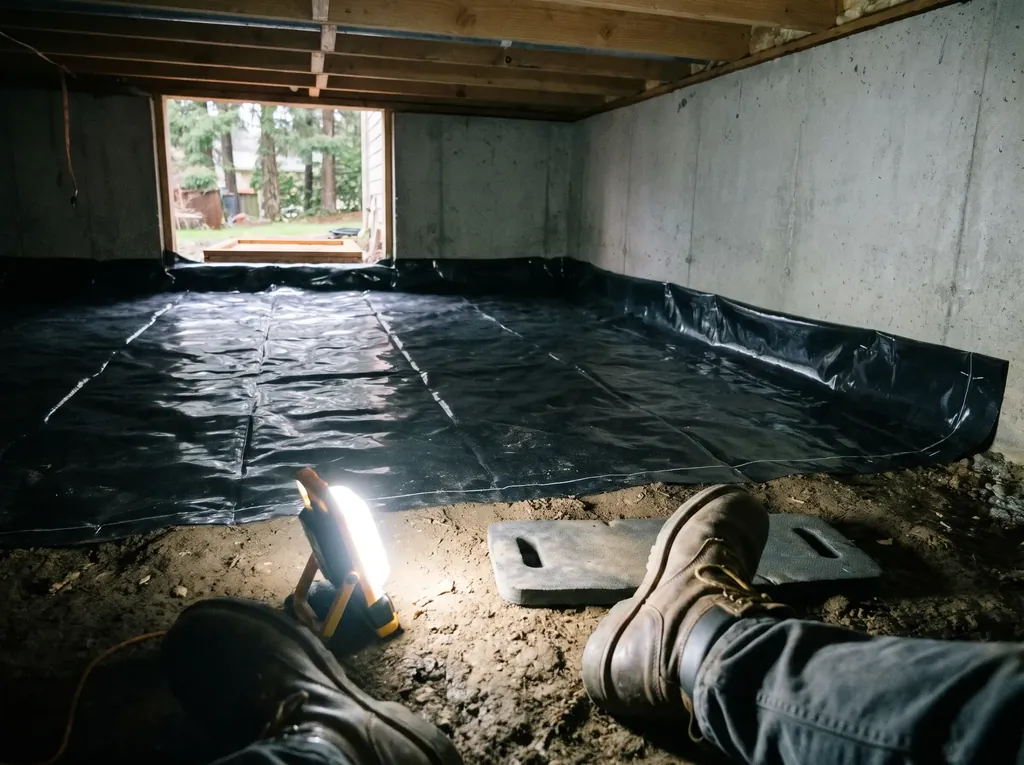
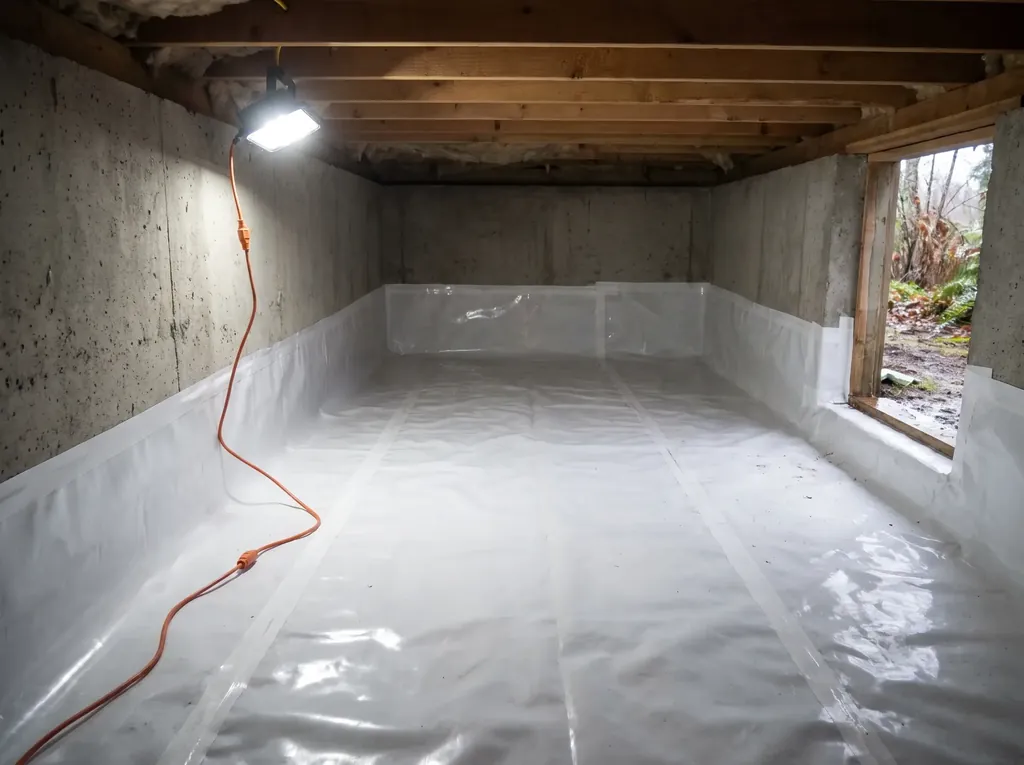
New plastic vapor barrier laid over crawl space ground

The first thing to get right under the house

Bare soil in a crawl space releases moisture into the air above it. That is why the Department of Energy's Building America Solution Center says a crawl space "must always have a ground cover that prevents evaporation of ground moisture into the crawlspace." Washington agrees. The state's residential code requires a ground cover over the soil in crawl spaces, and when it was dropped in the move to the 2012 codes, the state put it back by emergency rule.

A ground cover is not the same thing as encapsulation. It covers the soil. It does not seal the walls, close the vents or turn the crawl space into part of the house. For a vented crawl space on a well-drained site, that can be fine. A small Washington State University study of new homes found that, with proper site water management, vented crawl spaces can perform adequately in the Northwest, helped by our relatively dry summers. The EPA's Indoor airPLUS program, which recommends sealed crawl spaces elsewhere, makes an exception for marine climates like ours.

So if your crawl space is vented, drains well and the inspector flagged a torn or missing vapor barrier, a new one may be the whole job. What it cannot do is stop water. If rain runs under the house every November, new plastic just hides it. The water source comes first.

What a new vapor barrier fixes

Torn, missing or patchy ground cover

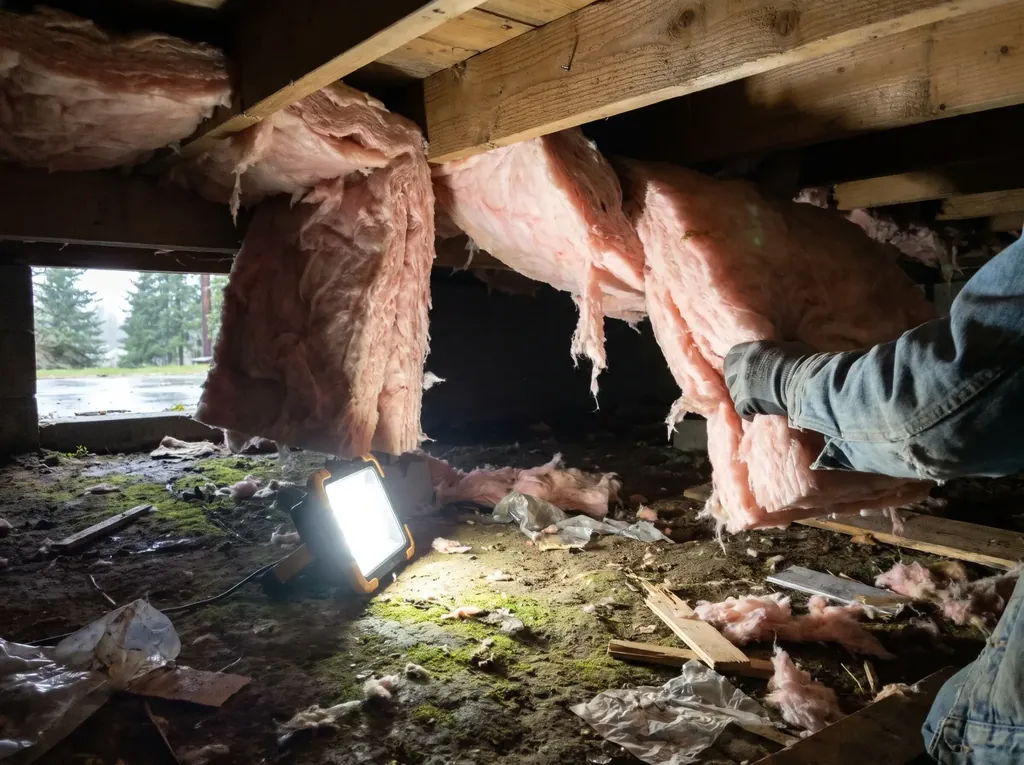
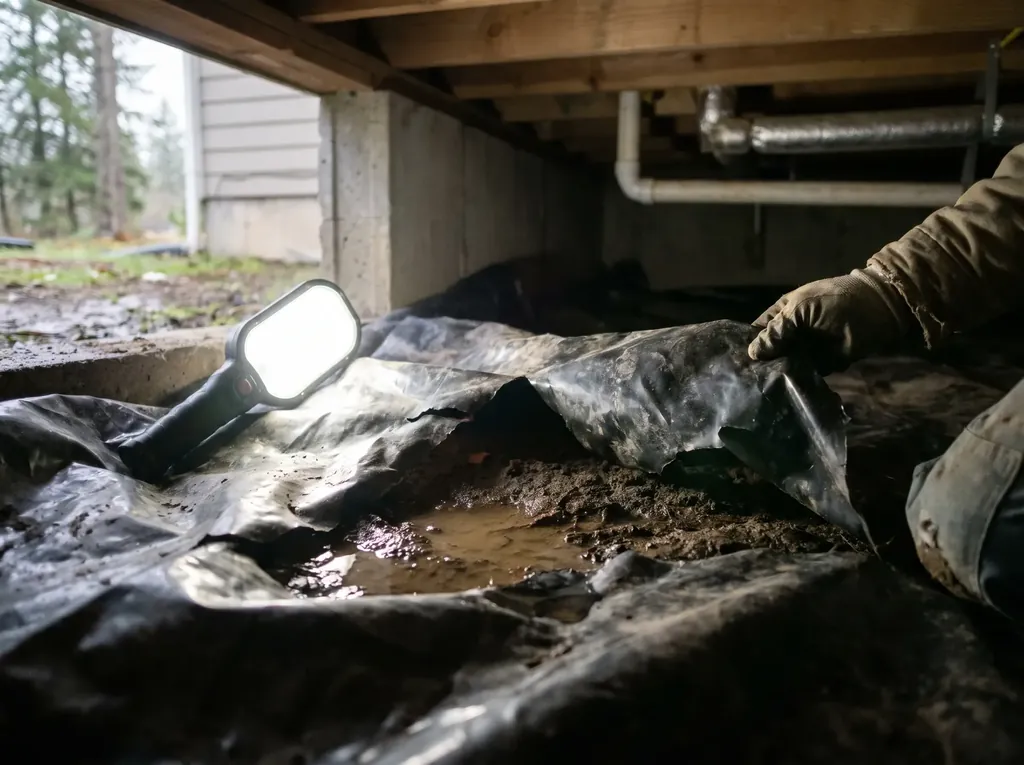
Old plastic tears, shifts and gets pushed aside as people work under the house over the years. Washington home inspectors are required to report missing or inadequate vapor barriers in crawl spaces with earth floors, which is why this line turns up in inspection reports.
Sheets that stop short of the walls

Washington's code calls for the ground cover to be overlapped at least 6 inches at the joints and extended to the foundation wall. Narrow sheets laid loose in the middle of the space, with a strip of bare dirt all the way round, do not meet that.

Bare soil around piers and supports

The DOE describes the ground cover as one continuous sheet with taped seams, kept continuous around piers and supports. We cut and seal around every post rather than leaving a gap of open soil at each one.

What a vapor barrier job is not

We lay ground cover and fix the water problems that sit behind it. We do not do everything a crawl space might need, and we will say so when we see it:

Structural foundation repair or house lifting

Rotten posts, failed beams, cracked footings or sagging floors go to a structural engineer.

Mold remediation

New plastic on the ground is not mold removal. If there is mold that needs dealing with, we will point you to a mold remediation company.

Pest extermination

If there are live rodents or insects, a pest control company needs to deal with them before we lay anything new.

Radon mitigation

A vapor barrier is not a radon mitigation system. We recommend a radon test, and if levels are high, a certified radon mitigation company.

One radon detail: under Washington's code, if a crawl space's vent area is reduced below the normal amount, or operable louvers are installed, a radon vent must be installed starting between the ground cover and the soil.

What every vapor barrier job includes

A look at where the water comes from

Before we lay anything, we check for standing water, wet soil, plumbing leaks and downspouts emptying beside the foundation. The EPA tells homeowners to fix plumbing leaks quickly, keep gutters working and make sure the ground slopes away from the house.

The old ground cover and debris taken out

Shredded plastic, old wood and scraps come out, so the new barrier lies flat on clean ground. Rodent droppings are handled the way the Washington State Department of Health describes: gloves on, no sweeping or vacuuming, and a bleach solution soak before removal.

A new barrier, lapped and run to the walls

The new ground cover covers all the soil, overlaps at least 6 inches at every joint and runs to the foundation wall, as Washington's code requires. We tape the seams and keep the sheet continuous around piers, as the DOE recommends.

We will tell you exactly which material we use and why before any work starts.

Torn old vapor barrier over wet crawl space soil

How a vapor barrier job goes

  1. Inspect

    We check the ground cover, soil, insulation, vents and any water.

  2. Check the outside

    We check where the roof water goes and which way the ground slopes.

  3. Recommend and quote

    If a vapor barrier is the right fix, we say so. If drainage has to come first, we explain why.

  4. Clear the floor

    Old plastic and debris come out and are bagged and hauled away.

  5. Lay and seal the new barrier

    Wall to wall, seams lapped and taped, fitted around every pier.

  6. Close up and hand over

    We check the hatch and walk you through the finished job.

Plastic stops vapor. It does not stop water.

A ground cover stops moisture evaporating out of the soil. Water running into the crawl space from a downspout or a hillside above the house can run under new plastic and sit there. The DOE's guidance is that moisture problems in the crawl space or around the foundation must be taken care of first.

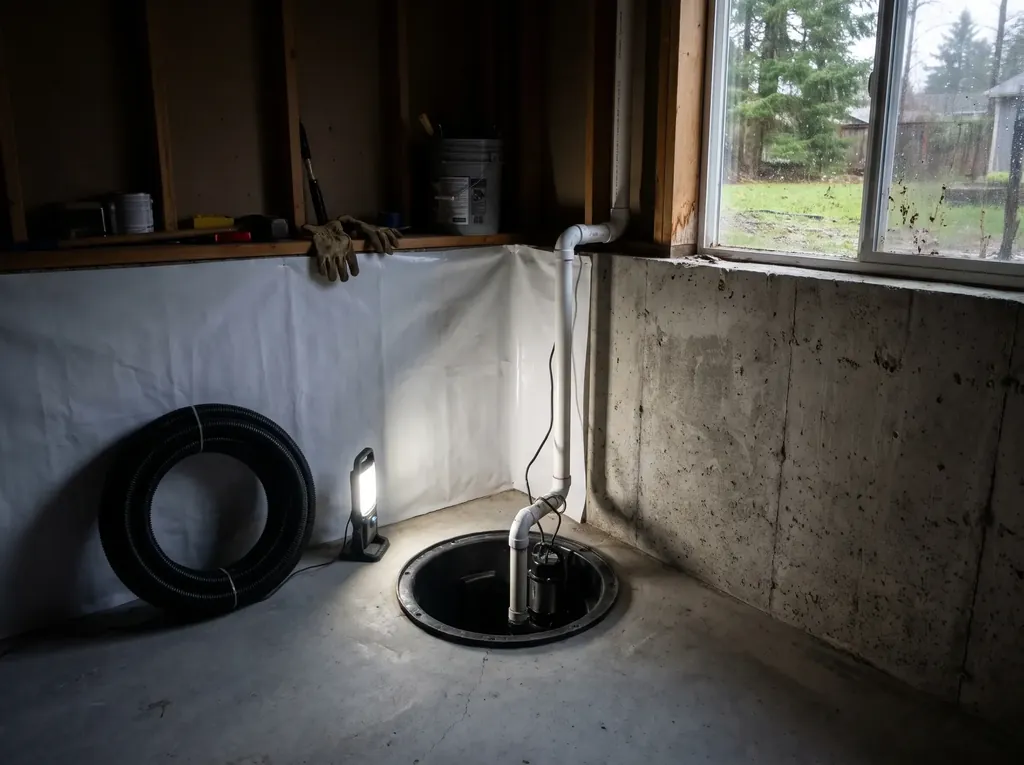
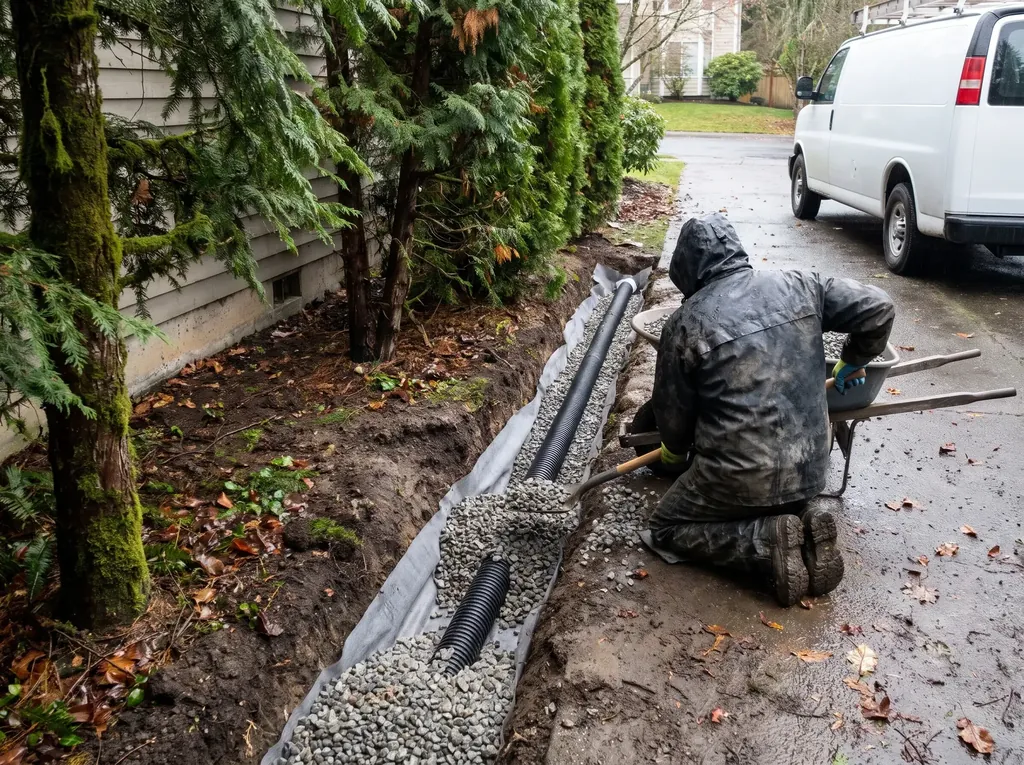
Bellingham gets about 35 inches of rain a year at the airport, and November is the wettest month. The DOE's guidance is to carry downspout water to sloping ground more than 5 feet from the foundation, or to an underground system more than 10 feet away. The International Residential Code calls for the ground to fall at least 6 inches within the first 10 feet away from the foundation. Where that is not enough, a french drain or a sump pump may be part of the answer.

What decides the price

A vapor barrier is a smaller job than a full encapsulation, but the price still depends on the house. The things that move the number:

Size

Square footage decides how much material goes down. Washington's code also ties crawl space vent and exhaust requirements directly to crawl floor area.

Access and headroom

Washington's home inspector rules recognize that crawl spaces with small openings or very low clearance can be too tight to enter. Tight spaces take more time to work in.

What has to come out first

Old plastic, debris and fallen or contaminated insulation may need removing before the new barrier goes down.

Water problems

If drainage has to be fixed first, that is extra scope.

The material

The barrier you choose affects the price. The code minimum is 6-mil polyethylene or approved equal, and anything thicker is a product choice.

Book a free inspection and we will tell you what the house needs and what it does not.

If you are weighing a vapor barrier against a sealed crawl space, our guide to vapor barrier or full encapsulation sets the two side by side.

Why Whatcom County homeowners call us

We are happy to sell you the smaller job. If a new ground cover and a downspout extension will do it, that is the quote you get.

We do the edges properly. The code asks for the ground cover to reach the foundation wall, and the DOE asks for it to stay continuous around piers and supports. Those edges are where we spend the time.

We tell you when the problem is not ours: a sagging beam, live rodents or a mold question gets named plainly, with the kind of specialist to call.

Warranty details are confirmed in writing with your quote.

What our customers say

We are only just starting to collect customer reviews. As they come in, they will appear here in full, in our customers' own words.

Crawl space vapor barrier questions

Do you really need a vapor barrier in crawl space?

If the crawl space has a dirt floor, yes. Bare soil releases moisture into the crawl space, and Washington's code requires a ground cover over the soil unless the crawl space has a concrete slab at least 2 inches thick.

Is a 6 mil vapor barrier enough for a crawl space?

It meets the code. Washington requires a ground cover of 6-mil black polyethylene or an approved equal, overlapped at least 6 inches at the joints and run to the foundation wall. Thicker material is a product choice, not a code requirement. How well the barrier is laid, lapped and fitted matters too.

Is a white or black vapor barrier better?

The only color named in Washington's code is black, for 6-mil polyethylene, and approved equal materials are allowed. We have not found a reliable source showing that the color of the barrier changes how well it controls moisture, so we would not choose one over the other on that basis.

Should a crawl space vapor barrier be taped?

Taping the seams is good practice. The DOE describes the ground cover as a continuous sheet with taped seams. For a vented crawl space, Washington's code requires joints overlapped at least 6 inches. For a crawl space without vents, the code requires the joints to be overlapped 6 inches and sealed or taped, with the edges sealed to the wall.

When not to use a vapor barrier?

On the ground of a dirt crawl space, always use one. Where a vapor retarder can cause trouble is on insulation. WSU researchers found fiberglass batts on crawl space perimeter walls with a vapor retarder on the warm, inside face stayed close to 100 percent humidity, and called that arrangement a mistake, recommending foam insulation instead. That finding came from homes in a colder part of the state, and it is a research recommendation, not a code rule.

What are the crawl space ventilation requirements in Washington State?

Under Washington's current residential code, in effect since March 2024, a vented crawl space needs at least 1 square foot of net vent area for every 300 square feet of floor area, arranged for cross ventilation, with openings covered by mesh or grilles no larger than 1/4 inch. The vent area can drop to 1 per 1,500 square feet with an approved Class I vapor retarder on the ground, but reduced vent area or operable louvers then call for a radon vent. Crawl spaces built without vents follow a separate rule: a sealed vapor barrier, a radon system and a fan that runs all the time. Your local building department has the final say on how these rules apply to your home.

What is the average cost to put a vapor barrier in a crawl space?

It depends mainly on the size of the crawl space, how easy it is to get into and move around in, how much old material has to come out first, and the barrier chosen. After a free inspection we can tell you what it needs and what it does not.

Where we work

We lay vapor barriers across Whatcom County: Bellingham, Ferndale, Lynden, Blaine, Everson, Sudden Valley, Birch Bay, Sumas, Deming and Custer.

Our service areas

Other crawl space and waterproofing services

Encapsulated crawl space with sealed white liner

Crawl Space Encapsulation

Ground and walls lined and sealed, with the moisture source fixed first, for crawl spaces that should be part of the house.

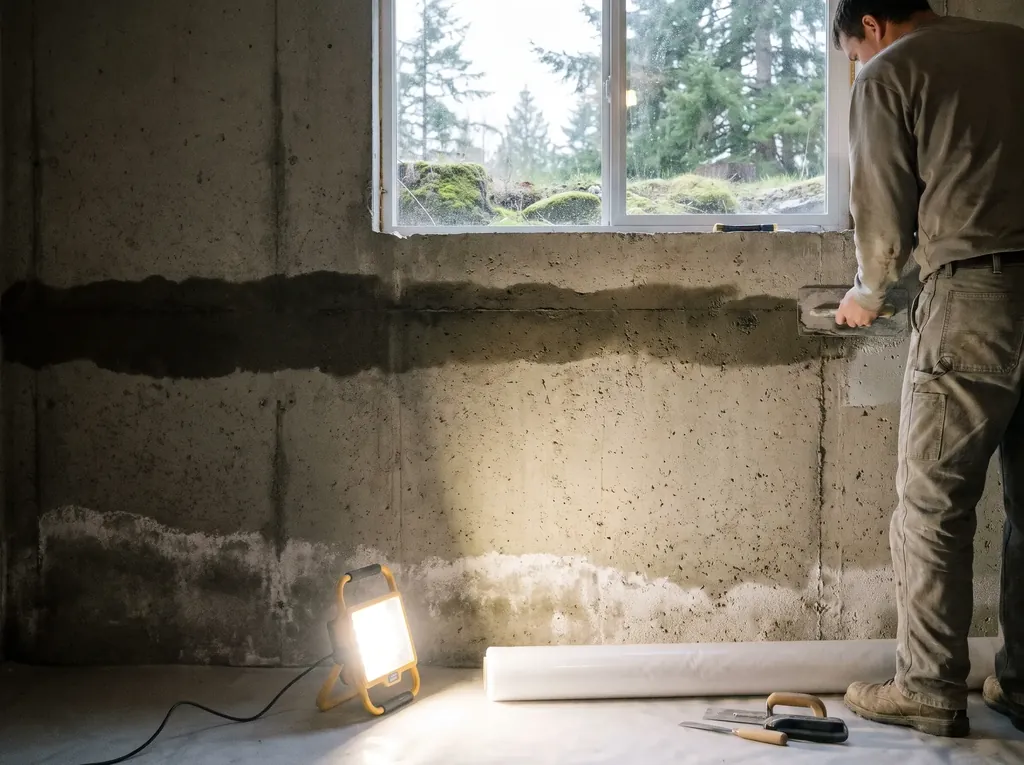
Damp concrete basement wall with water staining

Basement Waterproofing

Seeping walls and wet floors traced to the source, then fixed outside, inside or both.

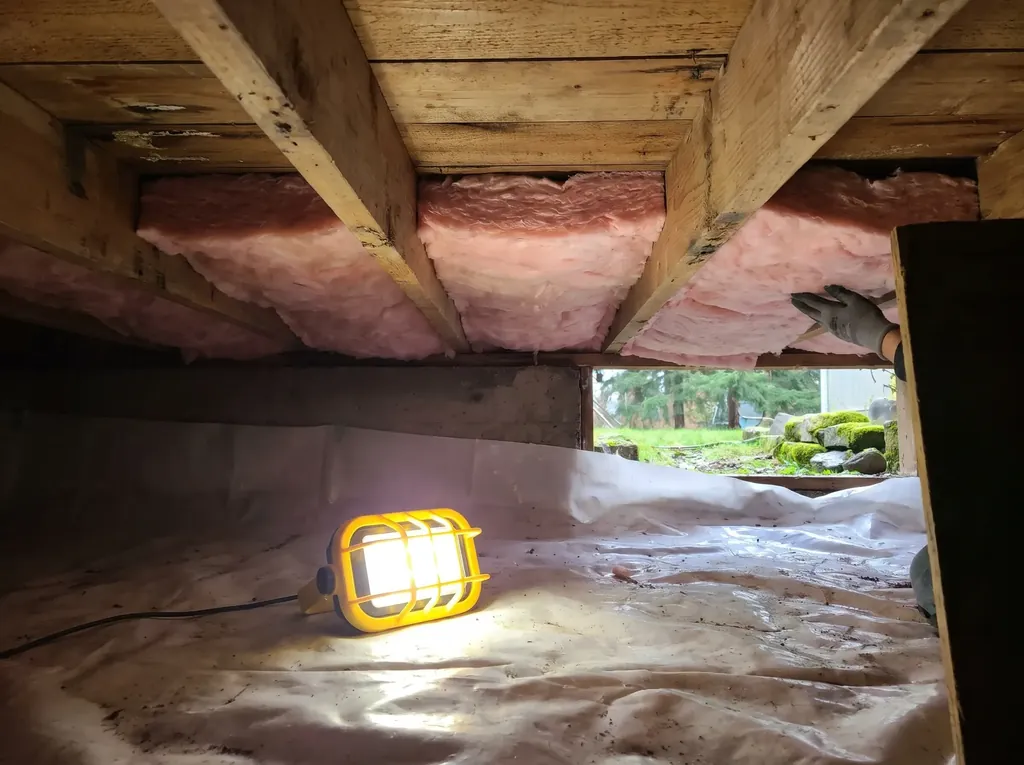
Insulation fitted between crawl space floor joists

Crawl Space Insulation

Floor or wall insulation, chosen to suit whether the crawl space is vented or sealed.

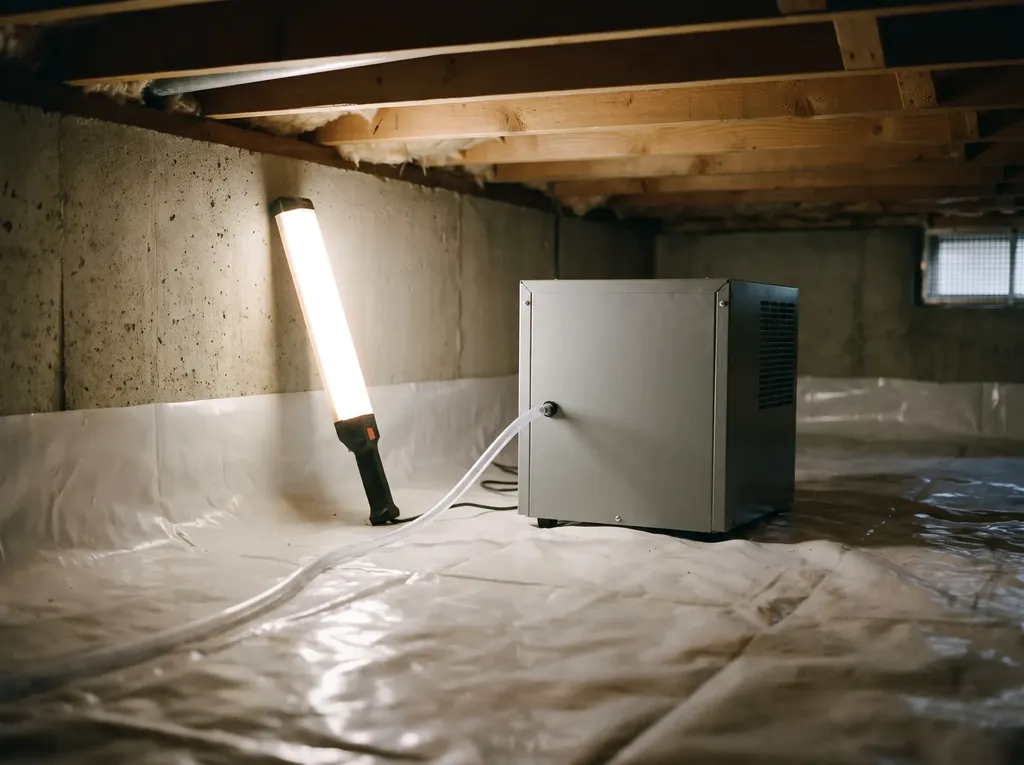
Dehumidifier on a sealed crawl space floor

Crawl Space Dehumidifiers

Sized for the space and drained properly, for sealed crawl spaces that still run damp.

Book a free crawl space inspection

Tell us what your inspection report said, or what you have seen from the hatch, and which town you are in. Photos and the report itself are welcome as attachments.

Standing water, a torn vapor barrier, a musty smell, a sump that runs all winter. Mention any deadline from a home sale.

Free and no obligation. Prefer to talk? Call (360) 555-0163.