New sump pits and pumps
For a crawl space or basement that collects water and has nowhere for it to go, a pit set into the low point with a pump that lifts the water out. It can be paired with a perimeter or interior drain that feeds it.
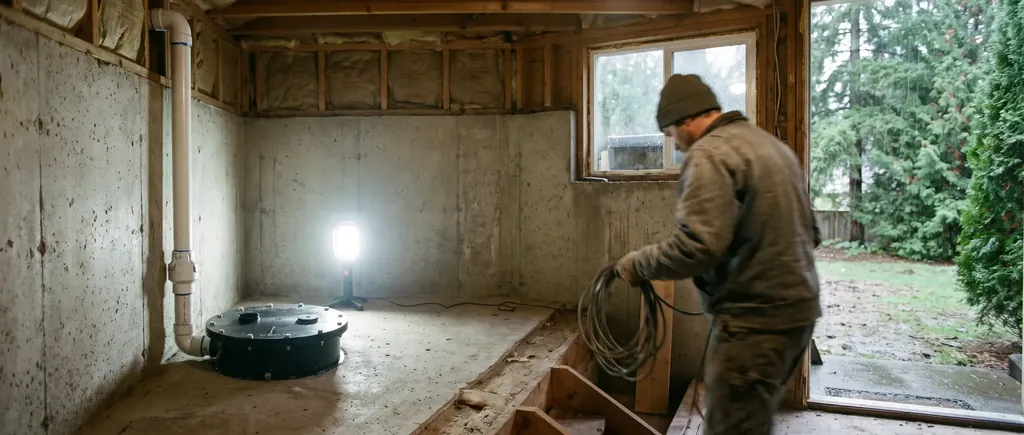
A sump pump is the last line of defense: it moves the water that has already reached your crawl space or basement back out, and sends it somewhere it will not come straight back. We install new pits and pumps, replace tired ones, and make sure the water ends up in the right place.
The pump is only as good as where it sends the water
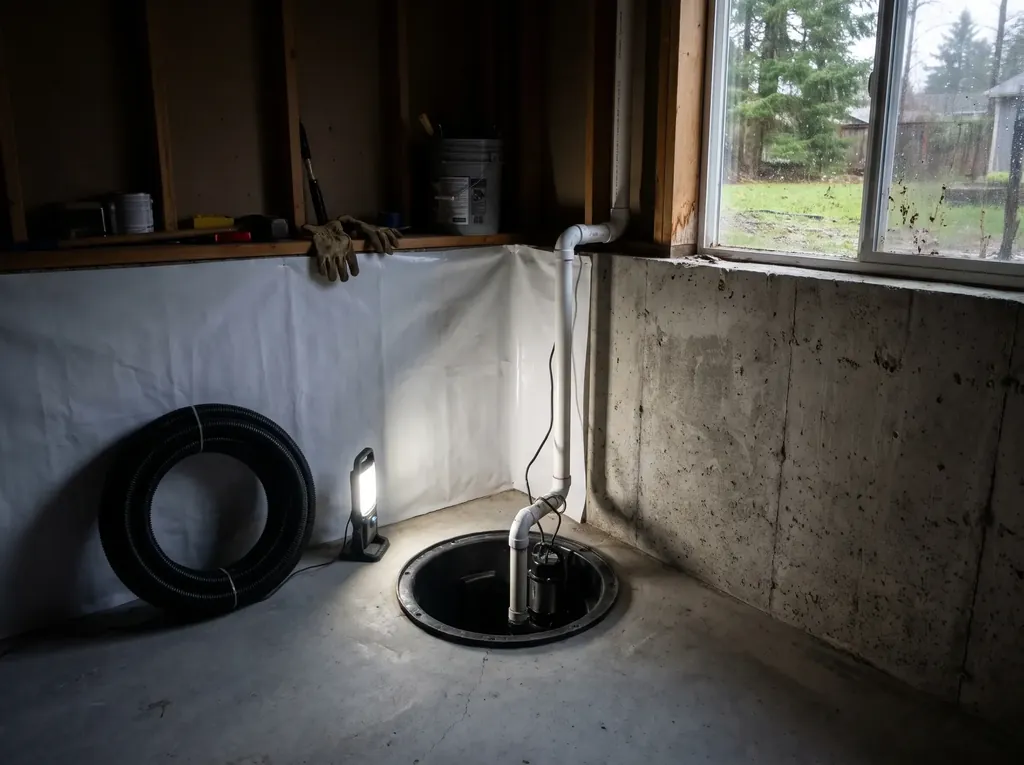
A sump pump usually has one job: lifting water that a footing drain or an interior drain has collected, and pumping it out of the house. The DOE describes a setup where a footing drain discharges into a sump pump set in the crawl space or basement floor, which then pumps the water to daylight or another suitable outlet.
That makes the pump important, but it also makes it the end of a chain. If the pump is running all winter, it is worth asking where all that water comes from. A downspout emptying beside the foundation or ground that slopes toward the house can feed water into the drain that the pump then has to lift back out. The EPA tells homeowners to keep gutters working and make sure the ground slopes away from the foundation. Fixing that can mean the pump runs less, not just that it runs better.
We install new sump systems, replace failing pumps and fix discharge lines that dump water back where it started. If what you need is a downspout extension instead, we will say so.
Bellingham's wet season is when you find out whether the pump works. About half of the year's rain at the airport falls between October and January, and November is the wettest month.
For a crawl space or basement that collects water and has nowhere for it to go, a pit set into the low point with a pump that lifts the water out. It can be paired with a perimeter or interior drain that feeds it.
Pumps that hum but do not move water, cycle on and off without stopping, or have simply quit. We replace the pump and check the pit, the float and the discharge line while we are there.
A discharge pipe that empties next to the foundation sends the same water back toward the house. We reroute it away from the foundation, to an outlet that is allowed.
We move water out from under the house and away from it. We do not do everything a wet house might need:
Cracks that suggest movement, settling footings and sagging floors go to a structural engineer.
If water has sat long enough for mold to grow on finished materials, that is a job for a mold remediation company. The EPA advises drying water-damaged areas within 24 to 48 hours to prevent mold growth.
A backup from the sewer line is a plumbing problem, not a groundwater one, and needs a plumber.
A sealed sump lid is not a radon mitigation system. We recommend a radon test, and if levels are high, a certified radon mitigation company.
Before we size or replace anything, we check the outside: downspouts, grading and anything that sends water toward the foundation. If the pump is working too hard because of something simple outside, you will hear about it.
A pit at the low point, where the drain can reach it, and a pump suited to how much water it has to move.
We will tell you which pump we recommend and why before any work starts.
In an insulated crawl space, the DOE's guidance is for the sump pit to have an airtight, gasketed cover. We fit one whenever the pit sits inside a sealed or encapsulated space.
The water goes out of the house and away from the foundation, to an outlet the local rules allow. Roof water from the downspouts stays in its own line, separate from the foundation drain system.
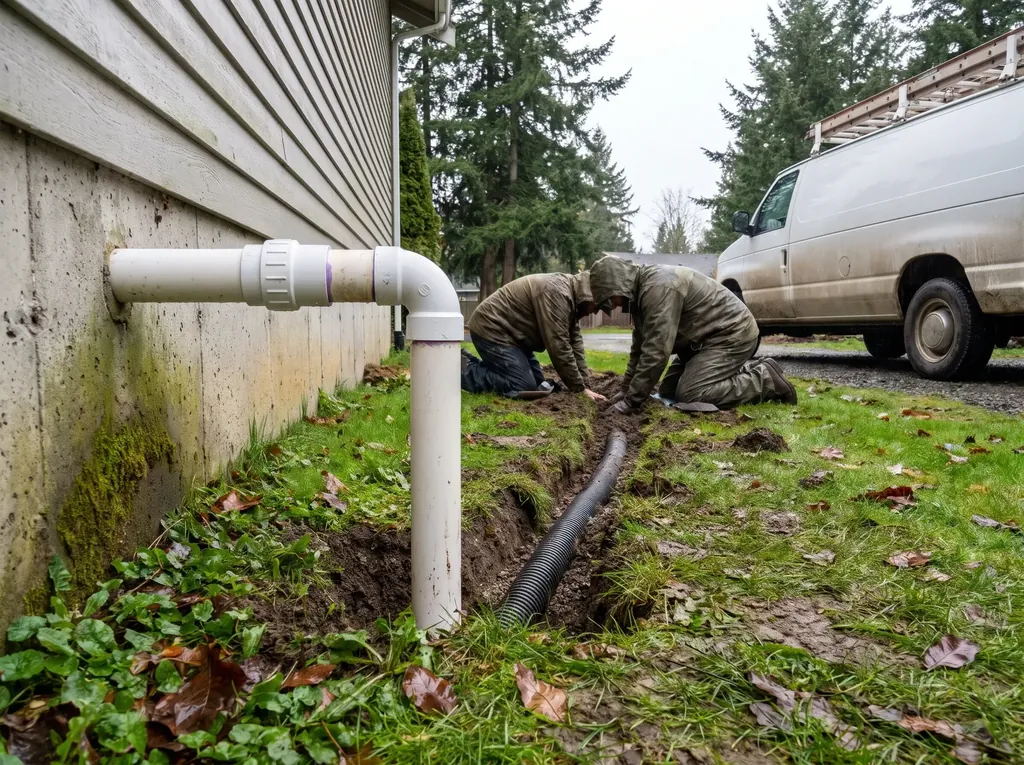
A pump that runs all the time, one that has stopped, water standing where there was none before, or a home inspection note. Photos of the pit and the discharge pipe outside help.
We look at the pit, the pump, the drain feeding it and where the discharge ends up, and walk the outside for downspout and grading problems.
That may be a replacement pump, a new pit and drain, a rerouted discharge line, or a fix outside that takes load off the pump. We explain why.
The pit is set, the pump fitted and the discharge line run to its outlet.
The lid is sealed where the space needs it, and we run water into the pit to check the pump starts, empties it and shuts off.
You get a short walkthrough: where the pump is, how to check it before the wet season, and what to watch for.
The pump is the easy part. The hard part is getting the water to somewhere it is allowed to go and will not come back.
The DOE lists the outlets a footing drain can use: daylight, a drywell, a storm sewer, or a sump pump that lifts the water out, with daylight outlets at least 10 feet from the foundation. That 10 feet is guidance for drain outlets, not a code distance for sump discharge, and we do not pretend otherwise. A discharge pipe that empties beside the wall is just a loop back into the ground the drain has to empty again.
In Bellingham, groundwater, stormwater and other drainage water are generally not allowed into the sanitary sewer without the City's specific approval, so we never tie a sump pump or footing drain into your sewer line.
We route sump and drain water away from the house to an approved outlet, and we check with the City before any connection to the storm system or any work in the street right-of-way. Some projects need a permit, especially when they add a sump pump, new wiring, drain lines or an exhaust fan, so we check with the City of Bellingham or Whatcom County before work starts and pull any permits the job requires.
Standard electric sump pumps stop when the power does. Battery backup pumps are designed to keep running on battery power during an outage.
We install battery backup pumps.
Replacing a pump in an existing pit and installing a whole new sump system are very different jobs. The things that move the number:
A new pit means digging or cutting into the floor, and often a drain to feed it.
A pump on its own does nothing until water can reach it. If a footing or interior drain is needed, that can be the bigger part of the job.
How far the line has to run to reach an allowed outlet, and what it has to pass through on the way.
A pit in a low crawl space with a tight hatch is harder work than one in an open basement.
A gasketed, airtight cover where the pit sits in an insulated crawl space.
Whether you add a battery backup pump.
Book a free inspection and we will tell you what the house needs and what it does not.
For more on whether your home needs one at all, read our guide: do you need a sump pump.
We ask why the pump is busy. A sump pump that runs constantly is doing its job, but it is also telling you something. Sometimes the answer is a downspout or a low spot in the yard, and fixing that may do more good than a bigger pump would.
We care where the water ends up. A good pump with a bad discharge line just moves the problem a few feet. We plan the outlet as carefully as the pit.
If the pit is inside a sealed crawl space, it gets a sealed lid. If the crawl space needs more, we tell you which parts can wait.
And we are honest about the edges. A sewer backup needs a plumber. Mold on finished walls needs a mold remediation company. You hear it straight.
Warranty details are confirmed in writing with your quote.
We are only just starting to collect customer reviews. As they come in, they will appear here in full, in our customers' own words.
Yes. One approach, described by Iowa State University Extension, is to remove a strip of floor along the foundation wall, lay drain tile in gravel and slope it to a new sump. The pump then lifts the collected water out to a suitable outlet. A sump can also sit in a crawl space floor, with a pit at the low point.
Not on its own. A sump pump tells you the house has had water to manage, and someone put in a way to manage it. The useful questions are how often it runs, where it discharges, whether the drain feeding it works, and whether there are signs of water getting past it. Washington home inspectors are required to inspect crawl spaces and basements for signs of flooding and moisture penetration, so read that part of the report closely.
It can. A pump can only move so much water, and a storm can put more water into the pit than it can keep up with, especially if roof water or surface runoff is feeding the drain. Keeping downspout water separate from the foundation drain and well away from the house helps. So does a backup: a standard pump stops if the power goes out, and a battery backup pump is designed to keep running.
In a big storm it can be, if a lot of water is reaching the pit. What matters is whether the pump keeps up, whether the cycling slows once the rain stops, and where the water is coming from. A pump that keeps running that often in dry weather is worth having looked at, because the water is coming from somewhere.
A working sump pump lowers the risk, but it is not a guarantee. A pump can fail, lose power or be outpaced in a big storm. It is also worth checking your insurance: Washington's Office of the Insurance Commissioner lists a sewer backup or sump pump overflow endorsement as optional coverage, and says coverage varies widely between policies.
Keeping the water from reaching the house in the first place. Carry downspout water more than 5 feet from the foundation onto sloping ground, make sure the ground slopes away from the house, and where needed, run a footing drain to daylight at least 10 feet from the foundation so no pump is needed. On a flat lot, a pump may be the only way to lift the water out.
We install and replace sump pumps across Whatcom County: Bellingham, Ferndale, Lynden, Blaine, Everson, Sudden Valley, Birch Bay, Sumas, Deming and Custer.
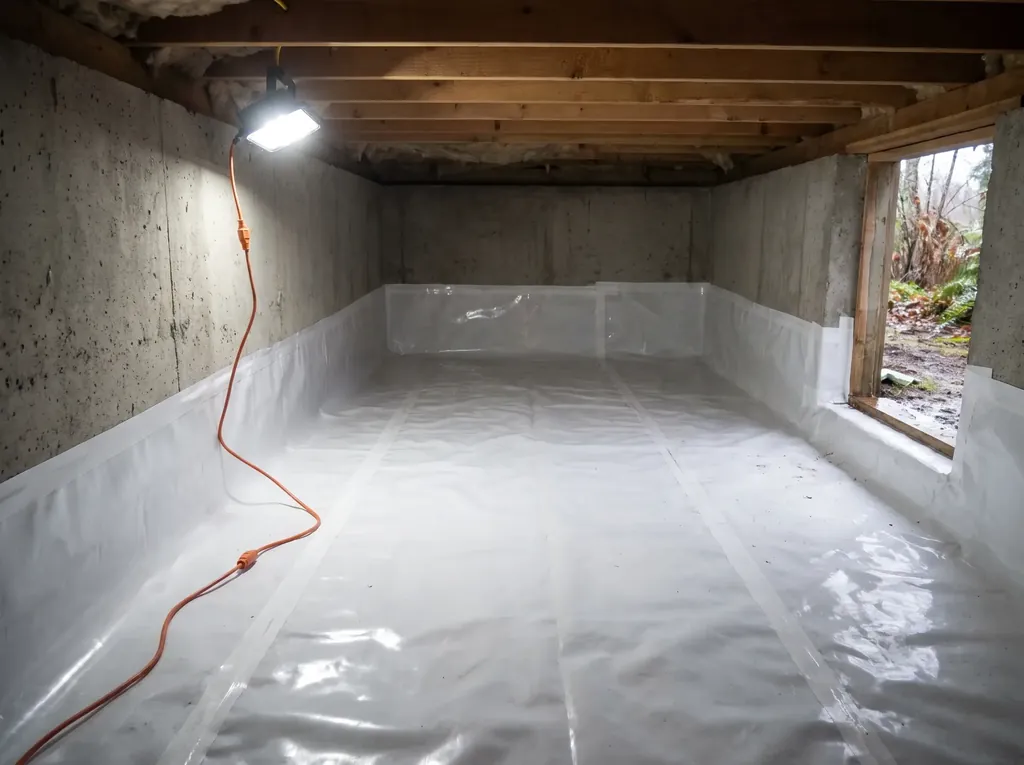
Ground and walls lined and sealed, with the moisture source fixed first, for crawl spaces that should be part of the house.
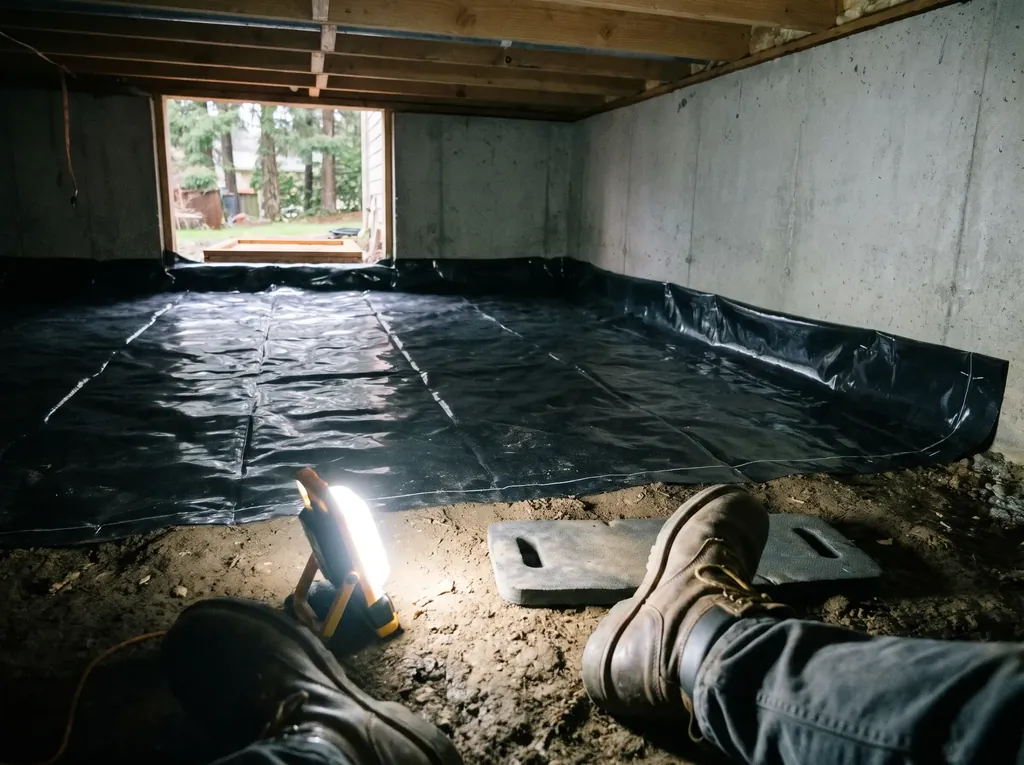
New ground cover, lapped, taped and run to the walls. Can be all a well-drained vented crawl space needs.
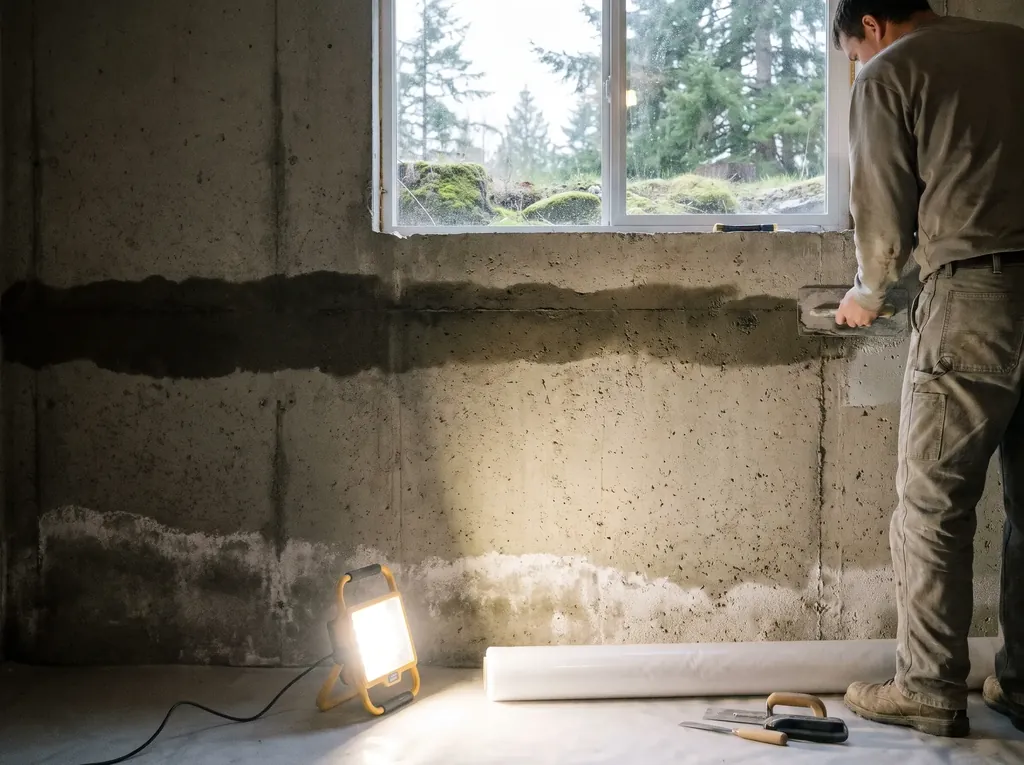
Seeping walls and wet floors traced to the source, then fixed outside, inside or both.
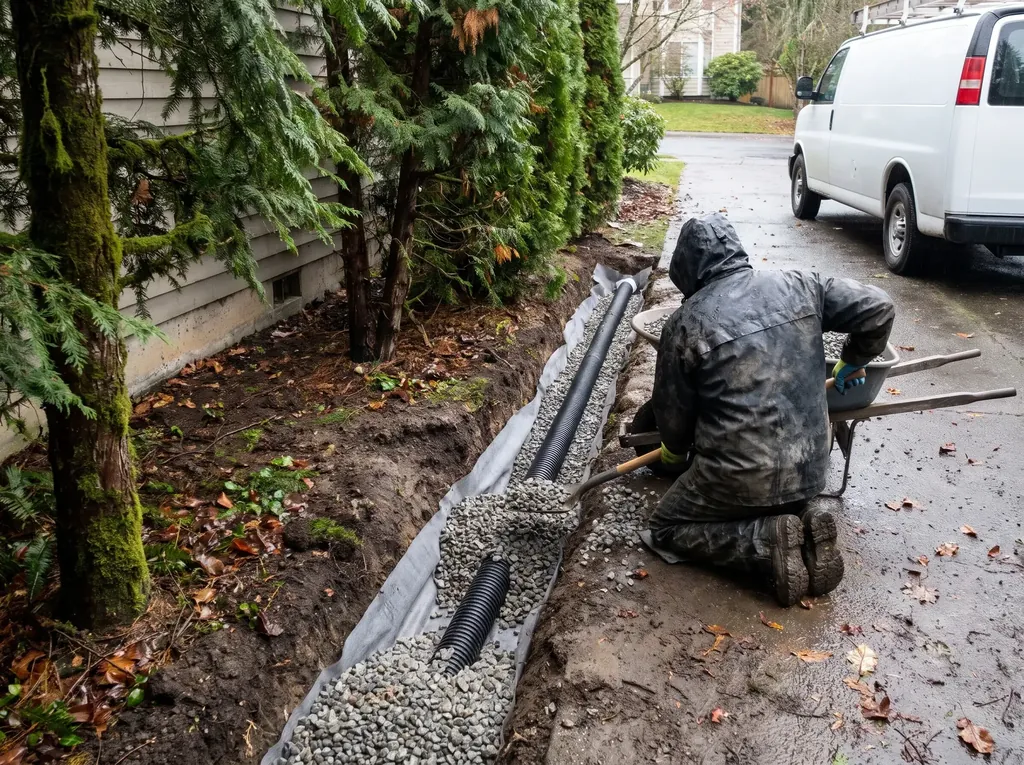
Footing drains, yard drains and downspout lines that keep water from reaching the foundation.
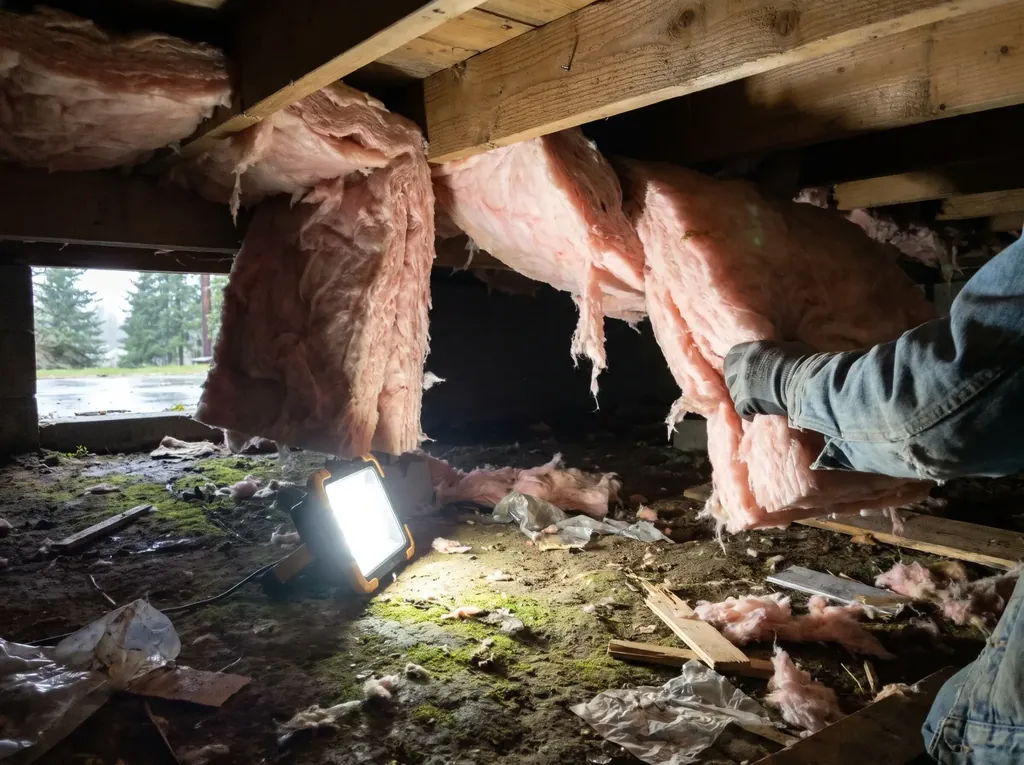
Fallen, wet or rodent-soiled insulation and old plastic cleared out so the space starts clean.
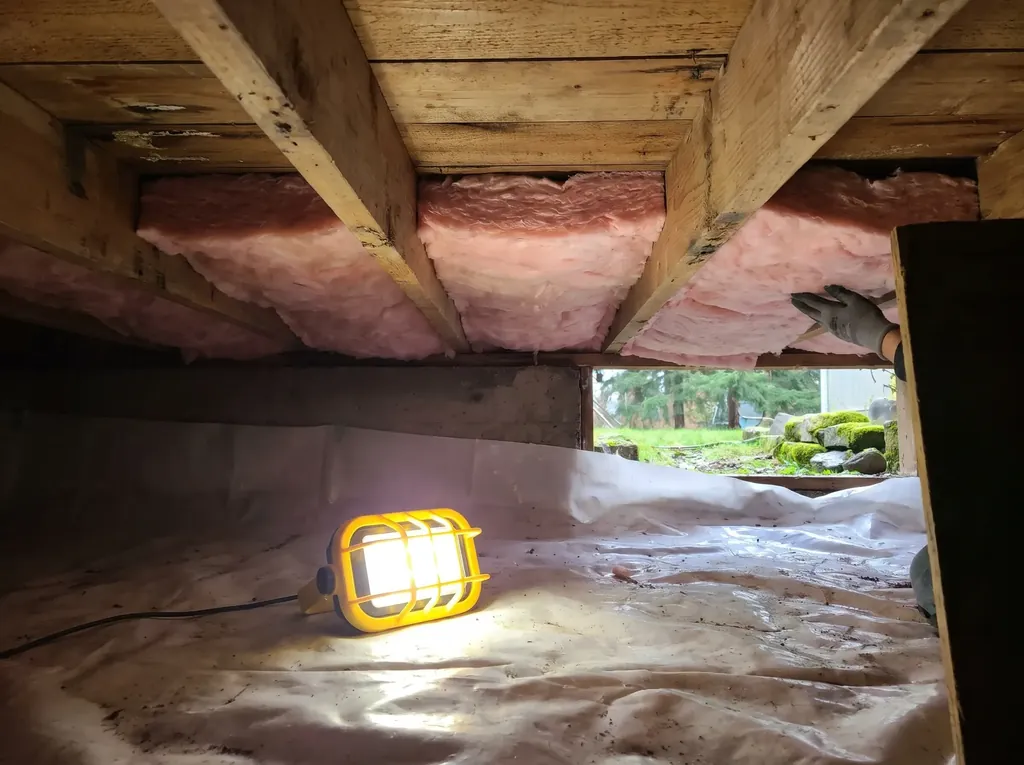
Floor or wall insulation, chosen to suit whether the crawl space is vented or sealed.
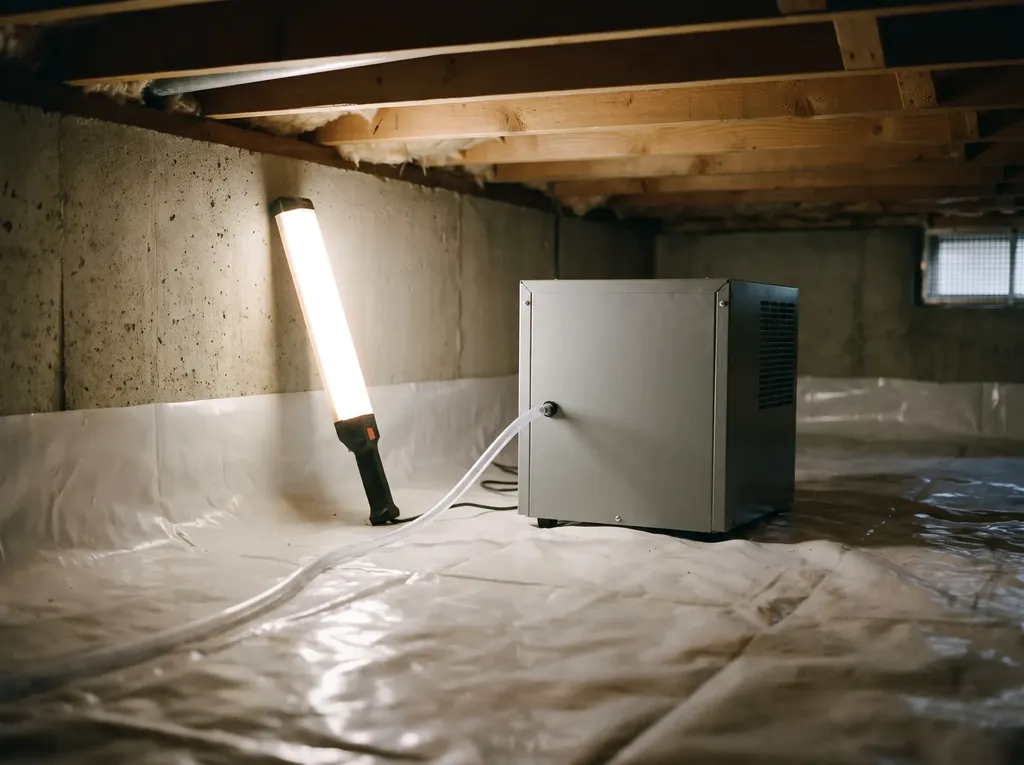
Sized for the space and drained properly, for sealed crawl spaces that still run damp.
Tell us what your sump pump is doing, or where the water is collecting, and which town you are in. A photo of the pit and one of the discharge outside are a great start.
We will be in touch to book a time to look under the house. If it cannot wait, call (360) 555-0163.
Nothing was sent. Please call (360) 555-0163 and we will set up your free inspection.