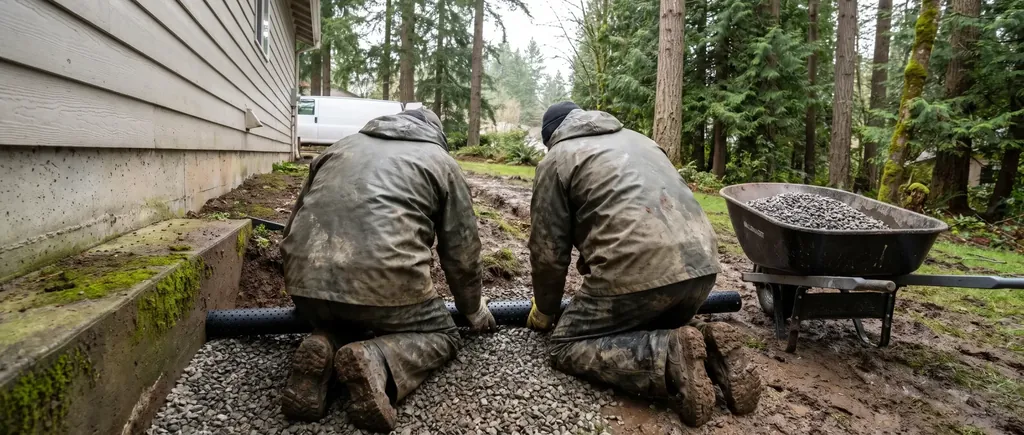
Crew installing a french drain along a house foundation

French Drains and Foundation Drainage

Water that ends up under a house can come from outside it: off the roof, down the slope, or along the foundation. We find which one it is, then fix the drainage, starting with the smallest fix that will actually hold.

Find the water first

  • Free inspections, or send photos first
  • The water source found before anything is quoted
  • We say so when a downspout extension is the whole fix
  • No structural, mold, pest or radon work, and we tell you who does
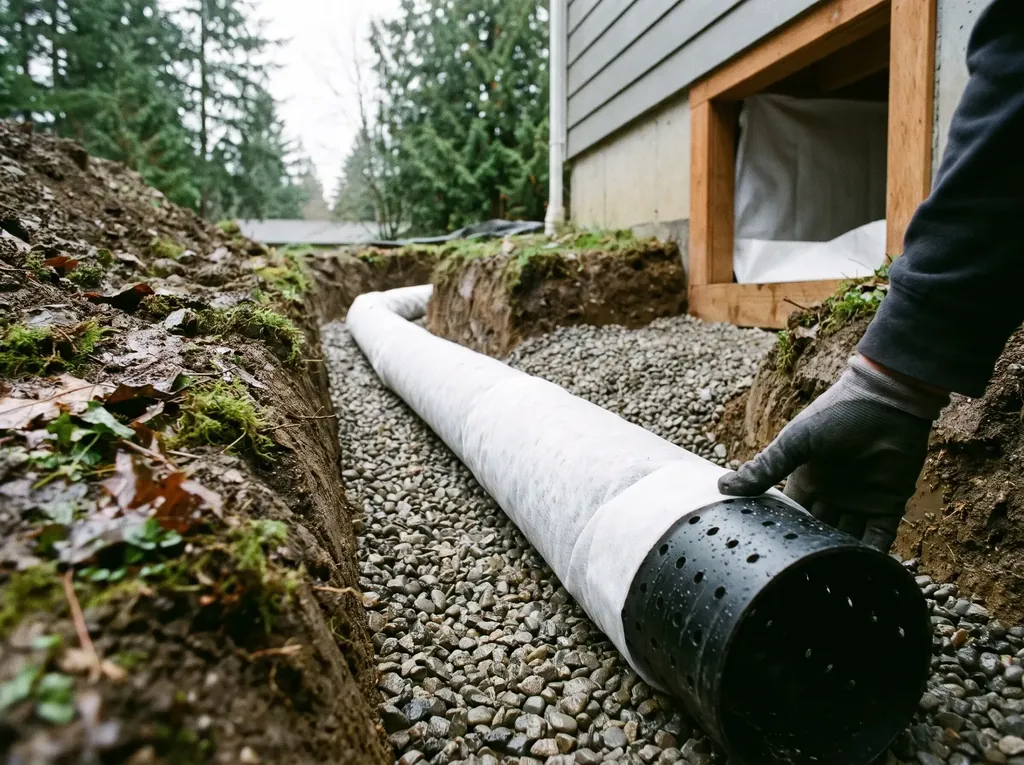
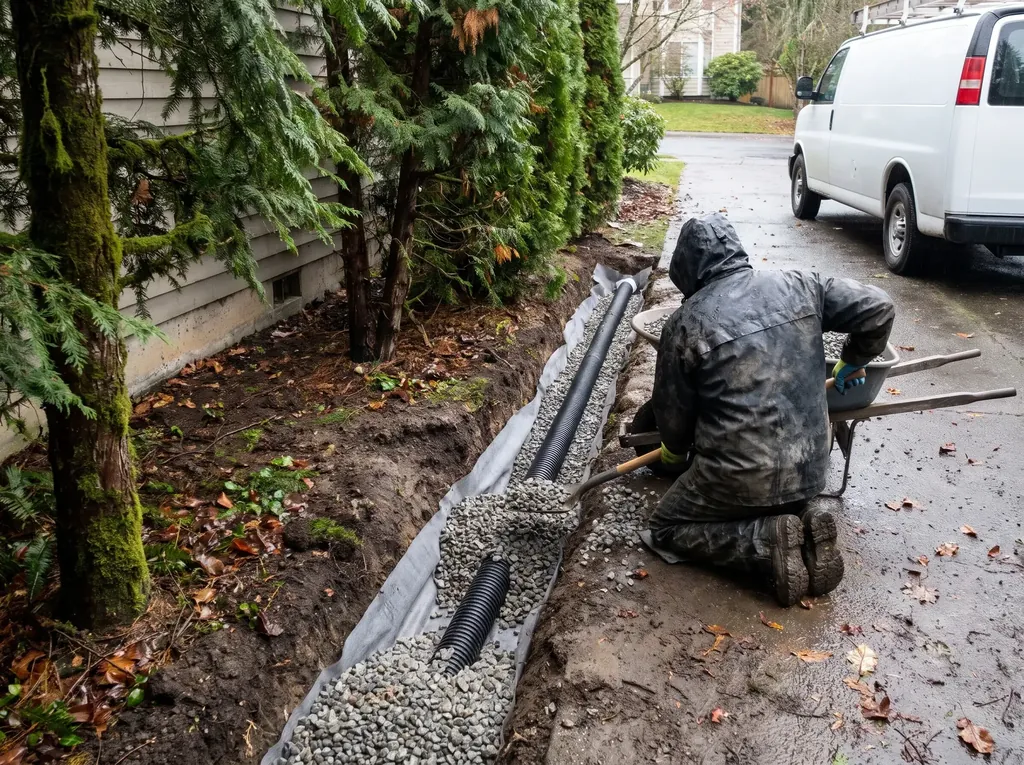
Trench with perforated pipe and gravel beside a house

Wet crawl space? Start with where the water comes from.

Bellingham International Airport averages about 35 inches of precipitation a year under NOAA's current climate normals. About half of it falls in just four months, October through January. If water is finding its way under a house, the wet season is usually when it shows.

The EPA's advice for keeping moisture out of a home starts outside: keep gutters clean and repaired, and make sure the ground slopes away from the foundation. Those are the first two things we check on every drainage call. Where do the downspouts empty, and which way does the soil run in the first few feet next to the house?

Sometimes the answer is a length of pipe and an afternoon. Sometimes the ground itself is sending water at the house, on a hillside lot in Bellingham or a steep wooded lot in Sudden Valley, and a drain is the right tool. Either way, we would rather fix the water than sell you a liner to sit on top of it.

The research backs that order. A small Washington State University study of new Northwest homes concluded that, with proper site water management, both vented and sealed crawl spaces can be built successfully. DOE guidance says a drainage system is needed where there is a flooding or leak history and no working perimeter drain, before anything is insulated.

Drainage problems we fix

Roof water dumped at the foundation

Downspouts that empty straight onto the ground beside the house, splash blocks that have sunk or shifted, and buried lines that have crushed or clogged. DOE guidance is to carry downspout water to sloping ground more than 5 feet from the foundation, or to an underground catchment more than 10 feet away. We route it there.

Surface water running toward the house

Ground that has settled back toward the siding, flower beds built up against the foundation, and runoff coming downhill from the lot above. We regrade where that will do it, and add a drain where reshaping the soil alone will not move the water.

Water collecting along the footings

Where water gathers at the base of the foundation, a footing drain collects it and carries it to an outlet. It is commonly called a French drain; the technical guidance calls it a footing drain or drain tile. It can run outside the footing or, in some crawl spaces, inside it.

What we do not do

We move water away from houses. We do not repair foundations, and we do not take on work that belongs to a different specialist:

Structural foundation repair and house lifting

A cracked, settling or leaning foundation goes to a structural engineer first. Drainage may be part of the answer, but we will not tell you a drain fixes a structural problem.

Mold remediation

The EPA says the key to mold control is moisture control. We fix the water. If there is growth that needs removing, that is a job for a mold remediation company.

If your inspection turns up either one, we will say so plainly and tell you what kind of company to call.

What every drainage job includes

A look at the whole path of the water

Roof, gutters, downspouts, the grade around the house, the foundation and the space underneath. We trace the water before we pick a spot for a drain.

A drain that goes somewhere

Every footing drain needs an outlet. DOE lists four: daylight, a drywell, a storm sewer or a sump pump, with daylight outlets at least 10 feet from the foundation. We show you where your water will come out before anyone digs.

Roof water kept separate

DOE guidance keeps downspout lines separate from the foundation drain system. We do not tie your roof into the pipe that is supposed to keep your footings dry.

Built the way the guidance describes

Perforated pipe, laid with the holes facing down, alongside the footing rather than on top of it, in a trench with at least 6 inches of washed gravel and landscape fabric under, around and over the stone. Then the trench is backfilled and the area left tidy.

Perforated drain pipe wrapped in filter fabric in a gravel trench

How a drainage job goes

  1. Send us what you have

    Photos of where water collects, the downspouts, or the line in your inspection report that flagged it.

  2. Free inspection

    We walk the outside of the house and look underneath it.

  3. A plain recommendation

    We tell you what we think the water source is and the smallest fix we expect to work. If that is a downspout extension you can do yourself, you will hear it from us.

  4. Agree the route and the outlet

    Before digging, we mark where the pipe will run and where the water will come out, and buried lines are located.

  5. Dig, lay and backfill

    Trench, fabric, gravel, pipe, gravel, fabric, then backfill, with downspout lines run separately where they are part of the job.

  6. Know what to watch for

    We show you how to check the outlet and the crawl space after the first heavy rain.

What the rules say about grading and drainage

The International Residential Code requires finished ground to fall at least 6 inches within the first 10 feet away from a foundation, with drains or swales where a lot line or an obstruction gets in the way. Washington adopts that code with its own amendments, and its amendments do not change that section. Codes change, and your local building department has the last word on your property.

In Bellingham, groundwater, stormwater and other drainage water are generally not allowed into the sanitary sewer without the City's specific approval, so we never tie a sump pump or footing drain into your sewer line. We route sump and drain water away from the house to an approved outlet, and we check with the City before any connection to the storm system or any work in the street right-of-way.

Some projects need a permit, especially when they add drain lines, a sump pump, new wiring or an exhaust fan, so we check with the City of Bellingham or Whatcom County before work starts and pull any permits the job requires.

What decides the price

The yard decides the price as much as the house does. The things that move the number:

Length of the run

How many feet of trench, pipe and gravel the job needs.

Where the water can go

A drain that daylights downhill a short distance away is simpler than one that has to travel to a drywell or a storm connection.

Whether a sump is needed

On flat ground with no downhill outlet, a footing drain can discharge into a sump pump that lifts the water out. That adds a pit, a pump and a discharge line.

What is in the way

Patios, walkways, decks and plantings slow the digging.

Downspout lines

How many downspouts need their own lines carried away from the house.

Inside or outside

A drain inside a crawl space means working in the space under the house, and tight access adds time.

Book a free inspection and we will tell you what the house needs and what it does not.

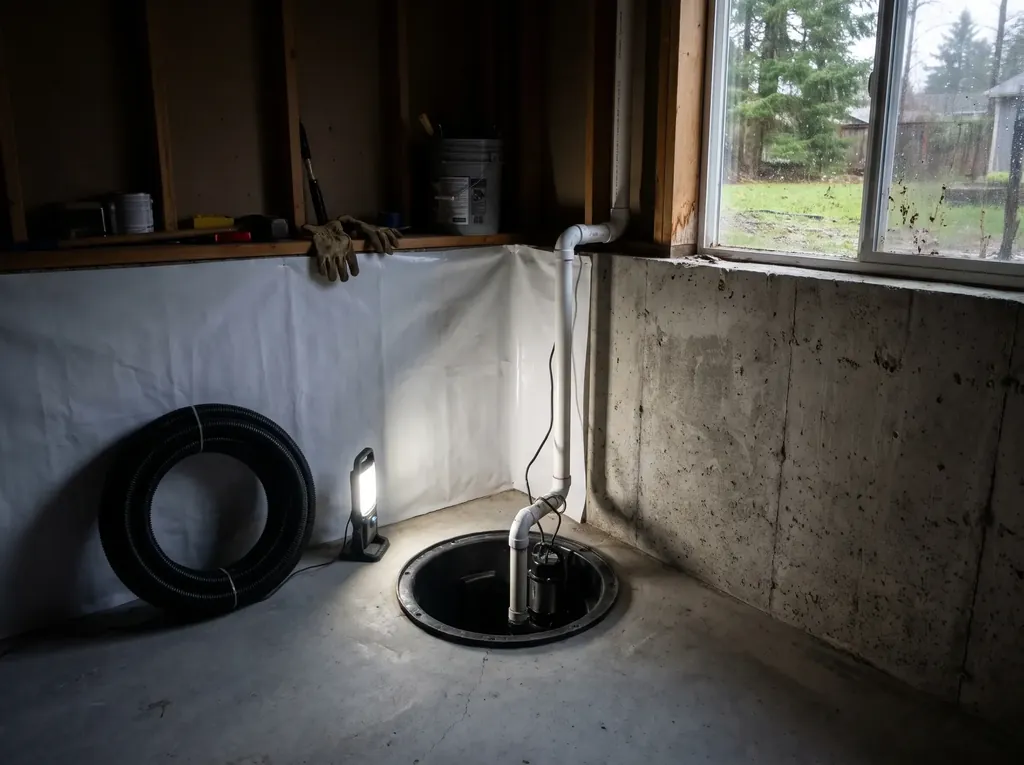
If water is reaching a pit or a low spot, our sump pump service covers the pump side of the job.

Why Whatcom County homeowners call us

We start with the cheap fixes. A downspout that empties at the foundation is one of the first things we look for, and if extending it is the whole answer, that is what we will tell you, even though it means a small job or no job at all.

We plan for the lot. On a hillside, runoff from above can head toward the house, so the job may be about catching water before it arrives. On flat ground, the hard part can be finding somewhere for the water to go, which is why we settle the outlet before we settle the trench.

We do not sell encapsulation as a drainage fix. A sealed liner over a crawl space that floods every November is a wet crawl space with plastic in it. If you want to seal the space later, our crawl space encapsulation work starts once the water is handled.
What our customers say

We are only just starting to collect customer reviews. When we do, they will appear here in full, in our customers' own words.

French drain questions

How much does it cost to put a French drain around the foundation?

It depends mostly on how long the run is, how deep it goes, what is in the way and where the water can be sent. A drain that daylights downhill is a very different job from one that needs a sump pump because the lot is flat. After a free inspection we can tell you what it needs and what it does not.

Should a French drain be against foundation?

A foundation drain sits beside the footing, not on top of it. DOE describes perforated pipe laid holes down along the outside or inside of the footings, in a bed of washed gravel. A drain meant to catch water running across a yard is a different thing, and it goes where the water is, which may be well away from the house.

How far from a house should a French drain be placed?

The guidance is more specific about where the water ends up than about where the trench runs. DOE puts daylight outlets for a footing drain at least 10 feet from the foundation, and downspout water more than 5 feet away on sloping ground or more than 10 feet away underground. Where the trench itself goes depends on where the water is coming from, which is what the inspection is for.

What are common French drain mistakes?

The ones we look for most: a drain with no real outlet, pipe set on top of the footing or laid with the holes facing up, no washed gravel or no fabric around the stone, and downspouts tied into the foundation drain, which DOE guidance keeps separate. The other common one is putting in a drain when the real problem was a downspout.

Where not to put a French drain?

Not on top of the footings. Not into the sanitary sewer: in Bellingham, groundwater, stormwater and other drainage water are generally not allowed there without the City's specific approval. And not as a substitute for fixing a downspout that empties at the foundation, which is a cheaper fix that should come first.

Do you put dirt on top of a French drain?

The gravel goes in first, with landscape fabric under, around and over it, so the fabric sits between the stone and the soil. What goes on top of the fabric depends on the yard and on what the drain is meant to catch, and we explain the choice before we backfill.

What are the downsides of a French drain?

It means digging, so lawn, beds and sometimes paths get disturbed. It needs somewhere to send the water, and on flat ground that can mean a sump pump, and a standard electric sump pump stops when the power goes out. And it is the wrong answer when the real problem is a downspout. We will tell you if a smaller fix will do.

Where we do drainage work

We do drainage work across Whatcom County: Bellingham, Ferndale, Lynden, Blaine, Everson, Sudden Valley, Birch Bay, Sumas, Deming and Custer, plus the rural roads in between.

Our service areas

Other crawl space and waterproofing services

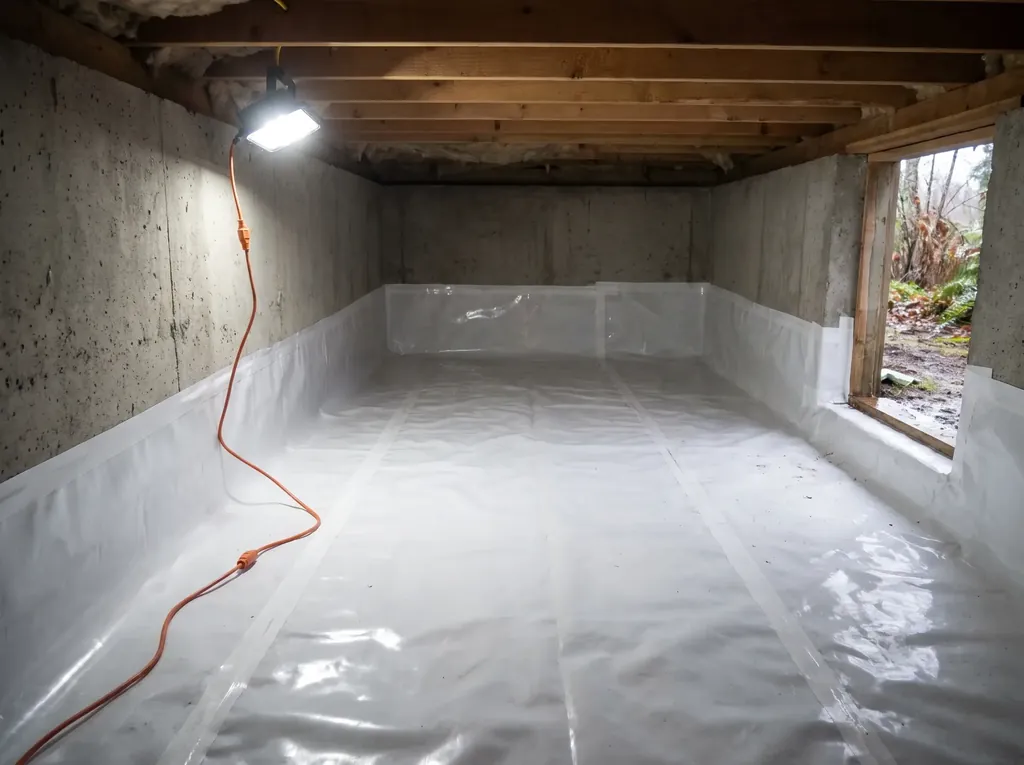
Encapsulated crawl space with sealed white liner

Crawl Space Encapsulation

Ground and walls lined and sealed, with the moisture source fixed first, for crawl spaces that should be part of the house.

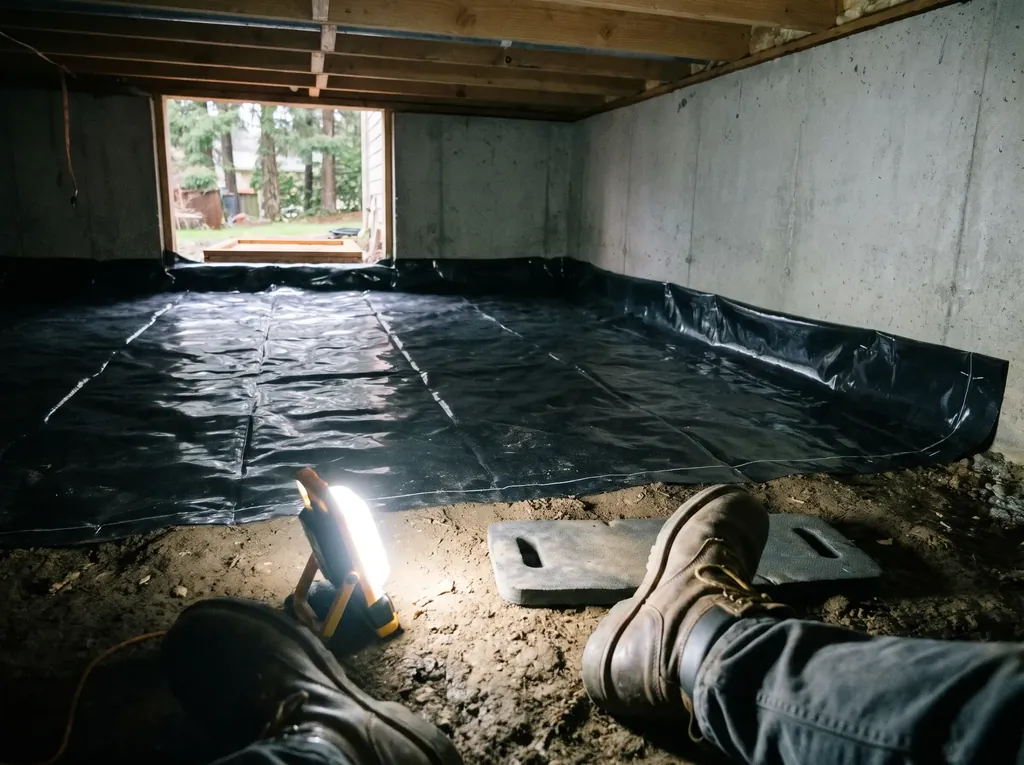
New plastic vapor barrier laid over crawl space ground

Crawl Space Vapor Barriers

New ground cover, lapped, taped and run to the walls. Can be all a well-drained vented crawl space needs.

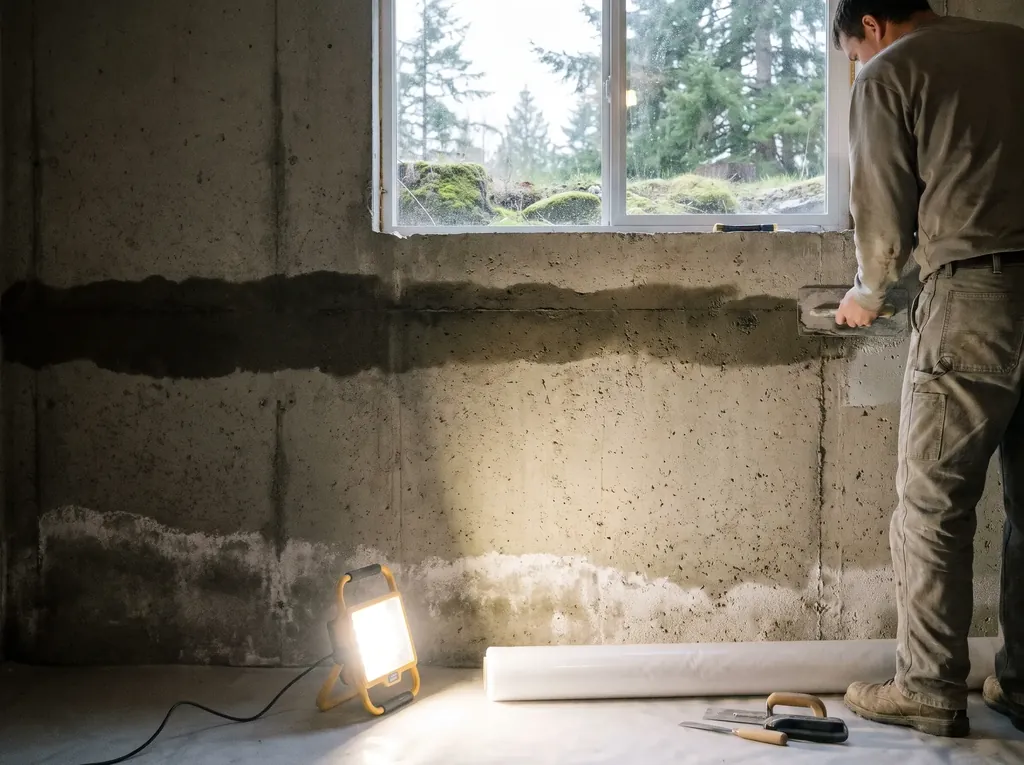
Damp concrete basement wall with water staining

Basement Waterproofing

Seeping walls and wet floors traced to the source, then fixed outside, inside or both.

Insulation fitted between crawl space floor joists

Crawl Space Insulation

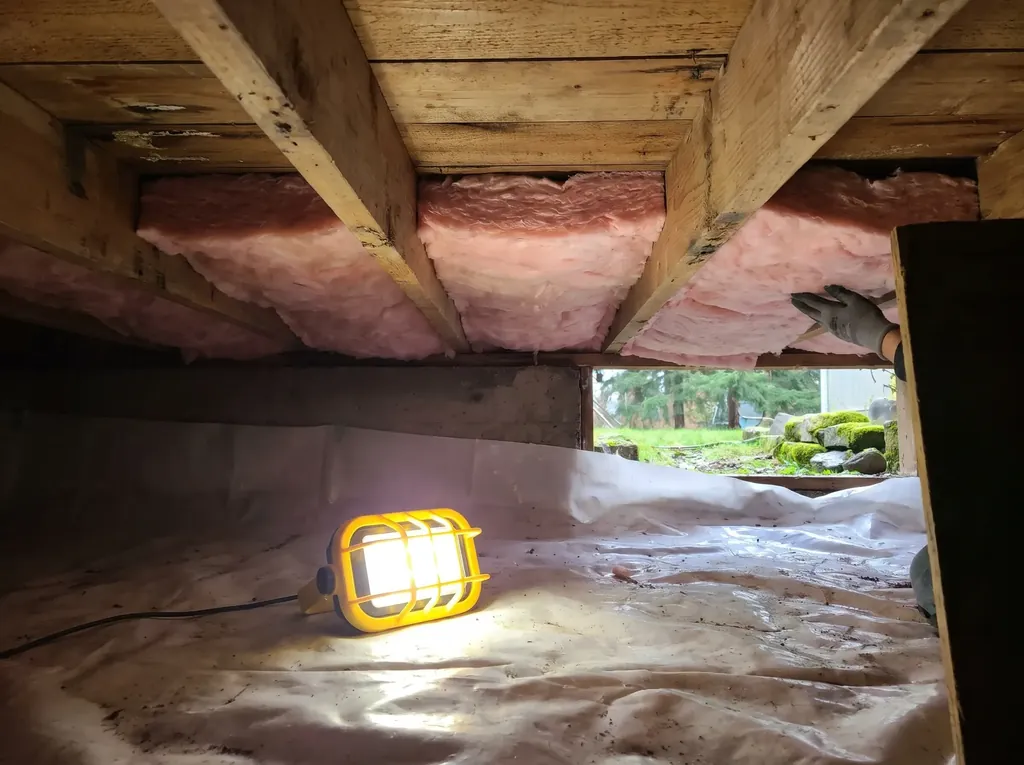
Floor or wall insulation, chosen to suit whether the crawl space is vented or sealed.

Dehumidifier on a sealed crawl space floor

Crawl Space Dehumidifiers

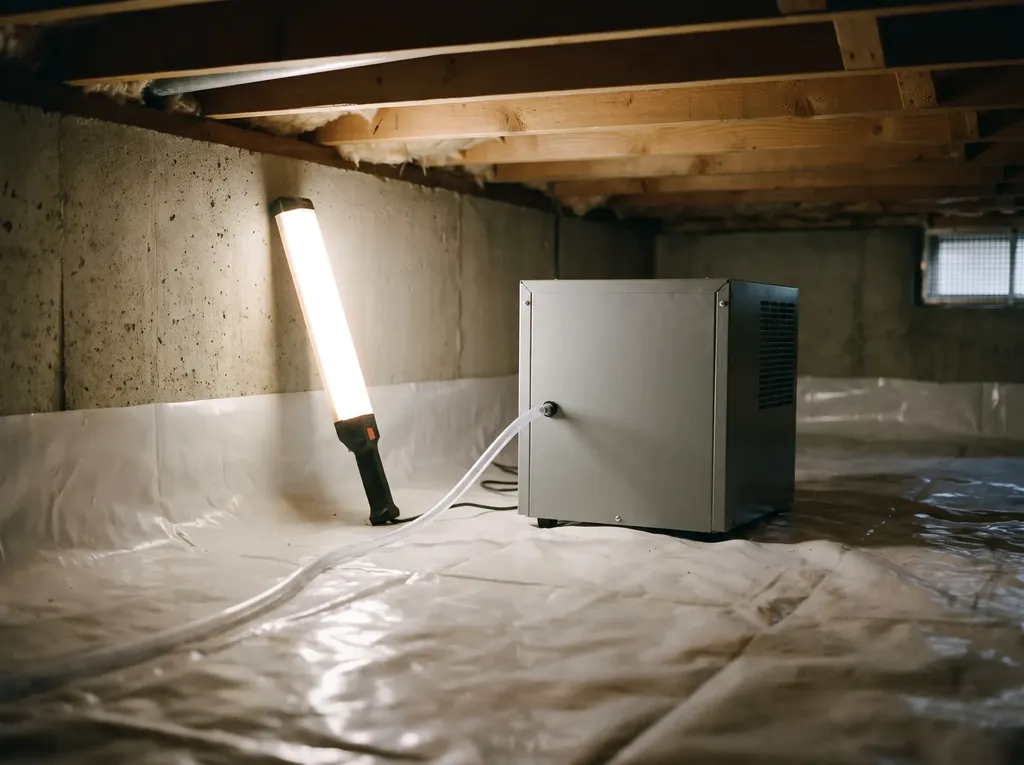
Sized for the space and drained properly, for sealed crawl spaces that still run damp.

Book a free drainage inspection

Tell us where the water shows up and when. A photo of the spot, the downspouts or your inspection report helps a lot. We will get back to you to book a look and give you an honest read on what it needs.

Standing water, a torn vapor barrier, a musty smell, a sump that runs all winter. Mention any deadline from a home sale.

Free and no obligation. Prefer to talk? Call (360) 555-0163.