Do You Need a Sump Pump? A Guide for Whatcom County Homes
- Free crawl space and wet basement inspections
- The water source fixed before any liner goes down
- A straight answer when the fix is small
Maybe not. A sump pump is the end of a drainage system, not a cure for a wet crawl space on its own. It collects water from a footing drain or an interior drain and pumps it to daylight or another suitable outlet. If water reaches the space under your house because a downspout empties beside the wall or the yard slopes toward the house, fixing those comes first, and it may be all you need.
You probably do need one when water keeps arriving after those fixes, a drain is the answer, and there is no lower ground for that drain to run to.
How a sump pump works
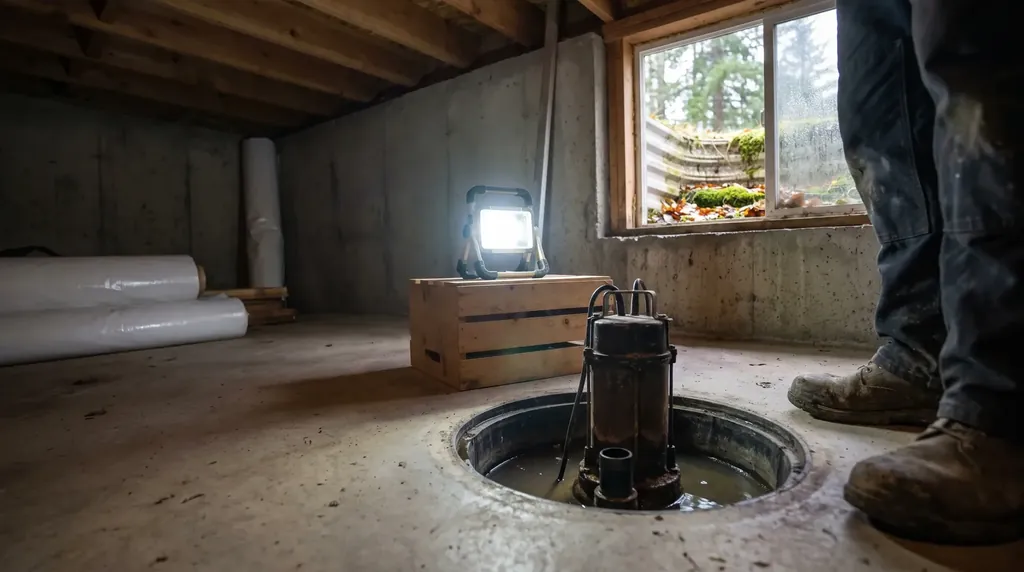
A sump is a pit set into the crawl space or basement floor. Water from a footing drain (often called a French drain or drain tile) runs into the pit, and the pump lifts it out through a discharge line to daylight or another suitable outlet. The pump is only as useful as the drain feeding it and the place the water ends up.
A footing drain always needs somewhere to go. DOE’s guidance lists four outlets: daylight, a drywell, a storm sewer or a sump pump. On a sloped lot, a drain may be able to run downhill to daylight with no pump at all. On flat ground with no lower spot to drain to, a sump may be the only practical outlet.
In a crawl space that has been insulated and sealed, the pit also needs an airtight, gasketed cover. An open sump in a sealed crawl space is a hole straight down to wet ground.
What to fix before you buy a pump
Downspouts
Roof water dumped at the foundation is one of the easiest sources of a wet crawl space to stop. DOE guidance is to pipe downspout water more than 5 feet from the foundation to sloping ground, or more than 10 feet to an underground catchment, and to keep it separate from the foundation drain.
Grading
EPA advises making sure the ground slopes away from the foundation so water does not collect around it. Flower beds built up against the wall and soil that has settled over the years can undo that.
Plumbing leaks
Water under the house is not always rain. EPA’s advice is to fix plumbing leaks as soon as possible. A wet patch under a bathroom is a plumber’s job, not a sump’s.
If water still collects after all three, DOE’s guidance is that a drainage system is needed where there is a history of flooding or leaks and no working perimeter drain. That is when a drain and a sump earn their place. See French drains and foundation drainage.
Can you add a sump pump to an existing basement?
Yes. One approach for existing basements, described by Iowa State University Extension, is to cut out a strip of floor along the foundation wall and lay drain tile in gravel, sloped to a sump. Very wet sites may also need tile under the floor or drains outside. In a crawl space with a dirt floor there is no slab to cut, but the pit still needs a sealed cover if the space is insulated.
Some projects need a permit, especially when they add a sump pump, new wiring or drain lines, so we check with the City of Bellingham or Whatcom County before work starts and pull any permits the job requires.
Where the water is allowed to go
The discharge line matters as much as the pump. Water pumped out beside the foundation can find its way straight back. DOE’s guidance puts daylight drain outlets at least 10 feet from the foundation. In Bellingham, groundwater, stormwater and other drainage water are generally not allowed into the sanitary sewer without the City’s specific approval, so we never tie a sump pump or footing drain into your sewer line, and that includes a laundry drain or a sewer cleanout. We route sump and drain water away from the house to an approved outlet, and we check with the City before any connection to the storm system or any work in the street right-of-way. Outside Bellingham, we check the local rules for your property before any line is run.
When the power goes out
Standard electric sump pumps stop when the power does. Battery backup pumps are designed to keep running on battery power when the electricity goes out. November, December and January are among the wettest months of the year at Bellingham International Airport under NOAA’s 1991 to 2020 normals, so if the house relies on its sump through winter, ask whether a backup makes sense. We install battery backup pumps.
Sump pumps and your insurance
Read your own policy before you need it. Washington’s Office of the Insurance Commissioner lists a “sewer backup or sump pump overflow endorsement” as optional coverage bought for an additional premium, and urges homeowners to read their policy because coverage varies widely. The same guide is plain that a homeowner policy will not cover flooding, and that flood insurance is bought separately. Water seeping through a foundation wall or floor is often treated as a maintenance issue, so check what your policy says about it.
What to check on an existing pump before the wet season
Under NOAA’s 1991 to 2020 normals, October through January bring about half of the year’s precipitation at Bellingham International Airport, so early fall is the time to look.
- Find the end of the discharge line. Make sure it is clear, still attached, and carrying water away from the house, not onto a neighbour’s lot or back toward your own foundation.
- Check the downspouts are separate. Roof water should not be piped into the foundation drain that feeds the sump.
- Check the lid. In a sealed crawl space, the cover should be airtight and gasketed.
- Have it checked. If you are not sure the pump still works, have it looked at before the first big storm.
Sump pump questions people ask
Is a sump pump a red flag when buying a house?
Not by itself. A sump is a normal part of a drainage system. What matters is why it is there: ask the seller how often it runs, where it discharges, and whether there has been water in the crawl space or basement. In Washington, the home inspector has to look for signs of flooding and moisture in crawl spaces and basements, so read that part of the report closely.
What is a better alternative to a sump pump?
Keeping the water from reaching the house. Carry downspouts well away, make sure the ground slopes away from the foundation, and where the lot allows, let a footing drain run to daylight instead of a pump.
What are the negatives of a sump pump?
It needs power, so a standard pump stops in an outage. It needs a legal place to send the water. In a sealed crawl space it needs an airtight cover. And like anything with a motor, it needs checking.
Will my basement flood if I have a sump pump?
A pump only helps if water reaches it and it is running. A power cut, a blocked discharge line or more water than the drain can carry can all leave a basement wet. Check whether your policy includes a sump pump overflow endorsement.
Not sure if you need one?
Send us photos of the crawl space or basement, or the moisture notes from your inspection report. We will tell you where the water seems to be coming from, and whether a pump is part of the answer.
- Call(360) 555-0163
- Emailoffice@bellinghamcrawlspacepros.com
- HoursMon to Fri, 8am to 5pm.
Thanks, we have your request
We will be in touch to book a time to look under the house. If it cannot wait, call (360) 555-0163.
Online requests are not switched on yet
Nothing was sent. Please call (360) 555-0163 and we will set up your free inspection.